
Generic0


With the SparkFun Qwiic Connect System expanding every day, we want to make sure it becomes as accessible as possible but we understand there are other systems that can complement it out there. The Qwiic to Grove Adapter Cable allows interoperability between the SparkFun Qwiic Connect System and the I2C based Grove boards from Seeed Studio. Now you can plug Seeed Studio boards you may have onto the Qwiic bus or you can use this cable to introduce Qwiic sensors, inputs, and outputs into your Grove system.
Note: The Grove system has a variety of different signal systems that use the same connector. This cable only works with the I2C variety.
What's in the box?
1 x STEMMA QT / Qwiic JST-SH 4-pin Cable to Grove Adapter Cable
This handy little USB thingymajig allows you to power your Raspberry Pi Touch Display 2 from a USB port, keeping your GPIO pins free for HATs or jumper wires.
The Raspberry Pi Touch Display 2 (7" or 5") is powered by your Pi's GPIO pins using the provided cable and that weird block connector. If you're using a HAT on your Raspberry Pi, fitting this connector can be tricky, and sometimes impossible depending on the HAT's socket type. Sure you could use a stacking header passed through the HAT (if the HAT supports that), but we wanted something more compact that would work in every situation.
Simply plug the Touch Display 2 connector into the three pins on the USB module, pop that into any USB port on your Raspberry Pi, and that's about it! The module has a low header that makes it pretty much impossible to fit the display connector the wrong way around, and it's labelled as well, just in case you need extra reassurance.
You can also just use this as a generic 5V USB breakout, giving you 5V and GND pins to feed your other 5V things.
Works with the 7" and 5" versions of the Touch Display 2.
Features
- USB power breakout for Raspberry Pi Touch Display 2 - Compatible with 7" and 5" versions
- Power your Touch Display 2 without blocking your GPIO header for HATs
- Low pins and pin labels to avoid fitting the wrong way around
- Pre-assembled - no soldering required
- Compatible with Raspberry Pi 5/4/3/3B+/2/1
- Black PCB with smooth, rounded edges
- Designed in the UK by ePlop!
What's in the box?
1 x USB Power Breakout for Raspberry Pi Touch Display 2

MT3608 regulator boards are compact DC-DC boost converter modules designed to increase low DC input voltages to higher regulated outputs. The MT3608 is a step-up (boost) regulator: VOUT must be higher than VIN; it cannot step down. Typical input range is 2 V to 24 V, with adjustable outputs up to approximately 28 V. Continuous output current is typically 1A (2 A max peak), depending on boost ratio and cooling. Efficiency can reach about 90% under optimal operating conditions.
Specifications
- Input Voltage: 2 - 24V
- Output Voltage: 2 - 28V
- USB-C
- Max Output Current: 1A (Continious)
- Max Output Current: 2A (Max)
- Chipset: MT3608
- Efficiency: 96%
- Output Ripple: 100mV
- Load Regulation: +/-0.5%
- Size: 37 x 17 x 14mm
Notes
- Before Connecting Load - Presetting the Output to protect the load
- MT3608 is a step-up (boost) regulator: VOUT must be higher than VIN; it cannot step down
What's in the box?
1 x MT3608 Boost Voltage Regulator, Vin 2-24V, Vout 2-28V 2A Max
There are four different ways in which we can power up the Arduino. The most convenient of which, after programming it with your USB cable is the 9V DC 2.1mm barrel connector.
Specifications
- Wide input range, high precision voltage.
- Overload protection
- Short circuit protection
- Over temperature protection
- Input:100-240V AC 50/60Hz
- Output: DC 9V 1000mA
- Plug: EU Plug
- Dimension: 70mm x 80mm x 28mm
- Cable length: about 100cm
- DC Plug Dimension: 5.5mm x 2.1mm
- Colour: Black
- EU type
What's in the box?
1 x 9V 1A AC to DC Power Supply
You will also need a euro plug adapter
PLEASE NOTE: Misusing or mishandling a lithium-ion battery may cause a FIRE or EXPLOSION which can result in INJURY or DEATH.
The 18650 is a lithium-ion cell intended for use in high current 18650 battery packs. It can power a wide range of devices including a power bank, drone, or motion detection. The battery is often used for consumer-devices that require a high discharge rating, and are often built into small 18650 battery packs. The ICR chemistry should always be used with protective circuitry.
Specifications
- Capacity: 2600mAh
- Nominal Voltage: 3.7V
- Size: 18650 (Cylindrical)
- Max Continuous Discharging Current: 8A
- Max Pulse current: 13A
- Typical Capacity: 2600 mAh
- Style: Flat top
- Dimensions: 65 x 18.4mm
- Weight: 50g
- Discharge cut-off voltage: 2.65V
- Full Charge Voltage: 4.2V ± 0.05V
What's in the box?
1 x 18650 Li-ion battery
You might also need a battery charger
PLEASE NOTE:
Misusing or mishandling a lithium-ion battery may cause a FIRE or EXPLOSION which can result in INJURY or DEATH.
This battery is often used for consumer-devices that require a high discharge rating, and are often built into small 21700 battery packs. The ICR chemistry should always be used with protective circuitry.
Specifications
| Cell Voltage | 3.7v |
| Capacity | 5000mAh |
| Charge Current Standard | 1.45A |
| Charge Current Max | 3.4A |
| Max Discharge Current | 10A |
| Operating Temp Charge | 0°C to 45°C |
| Operating Temp Discharge | – 20°C to 55°C |
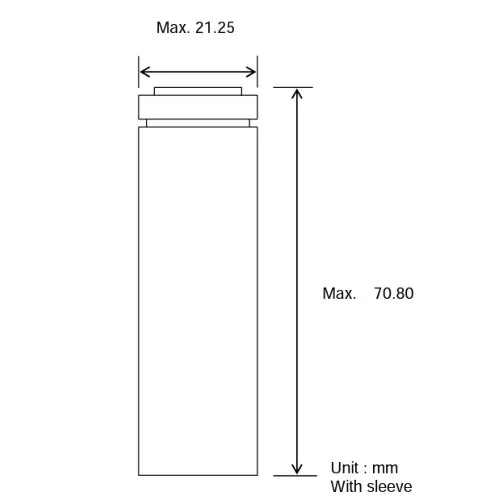
| Dimensions | Diameter: 21.44mm Height: 70.88 mm |
| Weight | 70g (max) |
Important Safety Warning
The user must have appropriate understanding of lithium ion batteries before purchase. Use caution when working with and using lithium ion batteries as they are very sensitive to charging characteristics and may explode, burn, or cause a fire if misused or mishandled.
- ONLY USE WITHIN MANUFACTURER LISTED SPECIFICATIONS
- DO NOT short circuit
- DO NOT overcharge or over-discharge
- DO NOT solder, spot weld only
- Usage of batteries is AT YOUR OWN RISK
- ALWAYS charge in or on a fire-proof surface and never leave charging batteries unattended
What's in the box?
1 x 21700 Li-ion battery
You might also need a suitable battery charger
The AC to DC 5V 2Amp EU Plug Power Supply is a compact and efficient power adapter that allows you to convert AC power from your wall outlet into DC power at 5 volts and 2 amps. It comes with an EU plug, making it compatible with European power sockets.
With its high-quality construction and reliable performance, this power supply is perfect for powering a wide range of electronic devices such as smartphones, tablets, cameras, and more. Its compact size and lightweight design make it ideal for travel and on-the-go use. Additionally, its built-in over-current, over-voltage, and short-circuit protection ensures the safety of your devices.
Specifications
- Working Temperature: -10~40℃
- Working Humidity: 10~90%
- Power Adapter: EU Plug
- Rate Voltage: 100~240V
- Rated Current: 2Amp
What's in the box?
1 x 9V 1A AC to DC Power Supply
You will also need a euro plug adapter

400 Point solderless breadboard. Perfect for solderless electronic projects.
Specifications
- 400 tie points total: 300 tie-point IC-circuit area plus two 50 tie-point distribution strips providing 4 power rails.
- White ABS plastic body with black printed legend.
- Color legend on distribution strips.
- Size: 84mm x 54.3mm x 8.5mm
- Peelable adhesive tape backing provided for attaching to a surface.
What's in the box?
1 x 400 Point Breadboard
Resources

Everyone loves the 1602-character LCD, it is cheap and works out of the box! But the need for 6 to 10 GPIOs is the pain :) It takes most of the GPIO of Arduino and other microcontrollers. Now with this I2C or Two wires interface LCD, you will save a lot of GPIO for your sensor and motor control.
This is a great blue backlight LCD display. As the pin resources of the Arduino controller are limited, your project may not be able to use a normal LCD shield after being connected with a certain quantity of sensors or SD cards. However, with this I2C interface LCD module, you can realize data display via only 2 wires. If you already have I2C devices in your project, you can still program this LCD with the correct I2C address. It is fantastic for Arduino-based projects.
Note: If the display is not clear (or blank), try to adjust the contrast level by tuning the onboard potentiometer.
Features
- I2C Address: 0x27
- Backlight (White character on Blue background)
- Supply voltage: 5V
- Size: 82x35x18 mm
- Come with I2C interface
What's in the box?
1 x I2C 1602 Serial LCD for Arduino & RPI
Check out our little acrylic dashboard for these displays
Resources
- Getting Started with I2C Serial LCD and Arduino, a tutorial by Cytron Technologies
- How to Connect I2C Lcd Display to Arduino Uno, a tutorial by JunezRiyaz in Instructables

- The waterproof level of the waterproof box is IP66.
- 132.2mm x 68.7mm x 50.1mm
- ABS Grey
What's in the box?
1 x waterproof enclosure
This neat little 3DBi ADS-B 1090Mhz SMA Antenna with Magnetic Base is designed to receive ADS-B data from aircraft! It features an SMA Male connecter, so it's compatible with all ADS-B receivers including FlightAware Dongles, PiAware, Mode S Beast, Radarcape, Kinetic SBS1/SBS3, RTL Dongles, and more. It's designed to attach neatly to an internal metal surface and track planes as they drift on by.
Customers should be aware that ADS-B signals do not penetrate solid surfaces well, and the antenna should be placed high and next to a thin external surface e.g. a window. Don't expect this to work well through 12" of brickwork!
Features
- Frequency: 1090MHz
- Gain: 3dBi (Max)
- Polarization Type: Vertical
- Rated Power: 50W
- Input Impedance: 50 Ohms nominal
- Cable Length: 3M
- Connector Type: SMA Male Plug
- Rod length: 17cm
- Internal Use Only
What's in the box?
1 x SMA Antenna

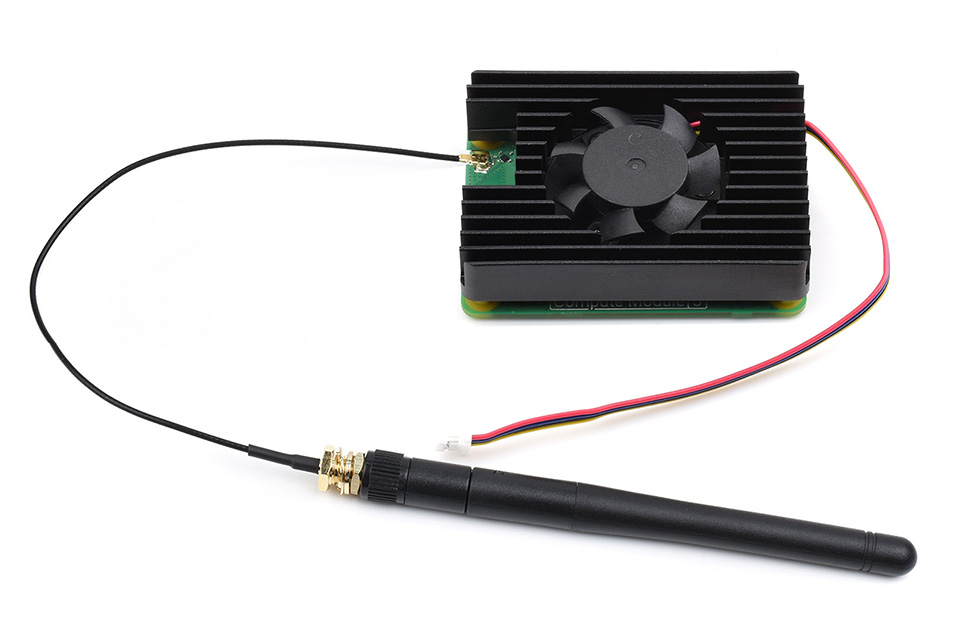
Features
- Low Noise, More Practical, With Thermal Tape
- Matching With The CM5 On Size And Mounting Holes, Fast Heat Dissipation
- Proper Space For Antenna Section(Antenna and CM4 are not included)
Specifications
| General | Low-profile, PWM speed adjustment |
|---|---|
| Interface | 4-wire PWM speed-adjustable fan header |
| Rated speed | 8000±10%RPM |
| Power supply | 5V |
| Cable Length | 125±10mm |
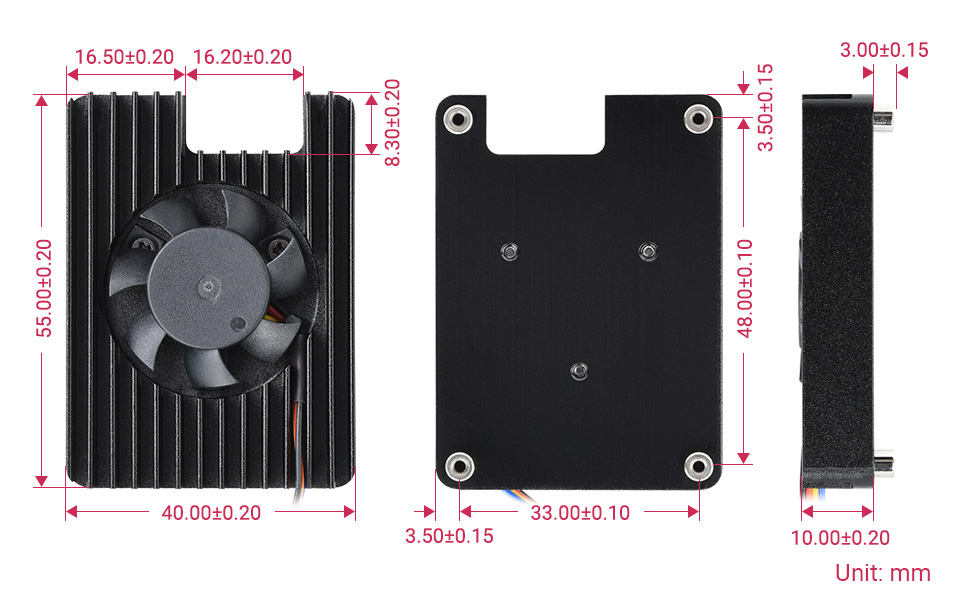
Outline dimensions
What's in the box?
1 x heatsink with fan
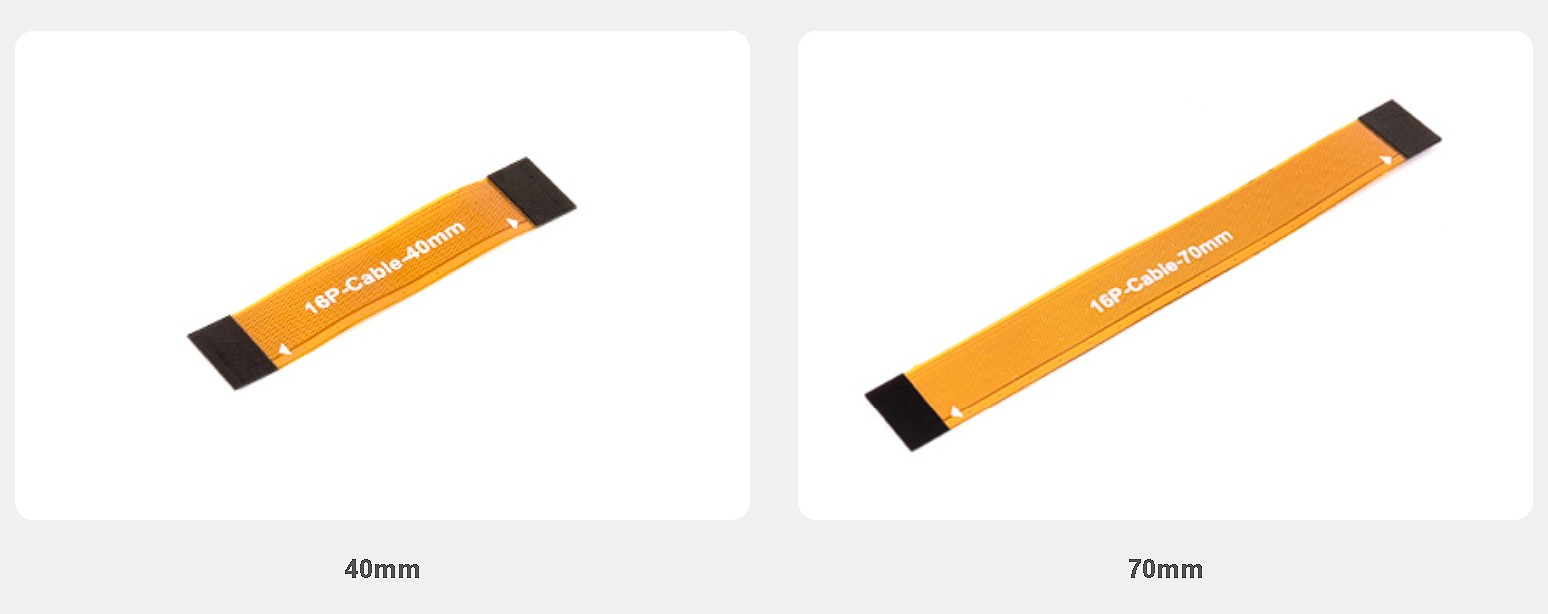
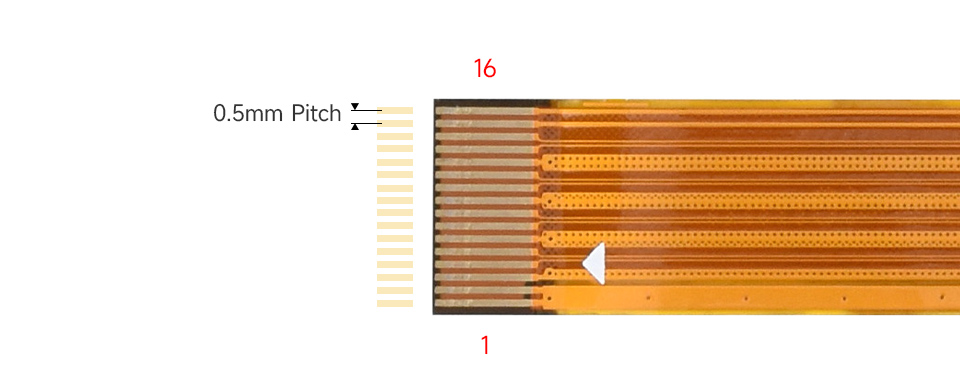
These cables give you a variety of options for connecting and placing your NVMe boards. Suitable for Various Raspberry Pi 5 PCIe HATs
Available in 40mm and 70mm options
Specifications
Application examples
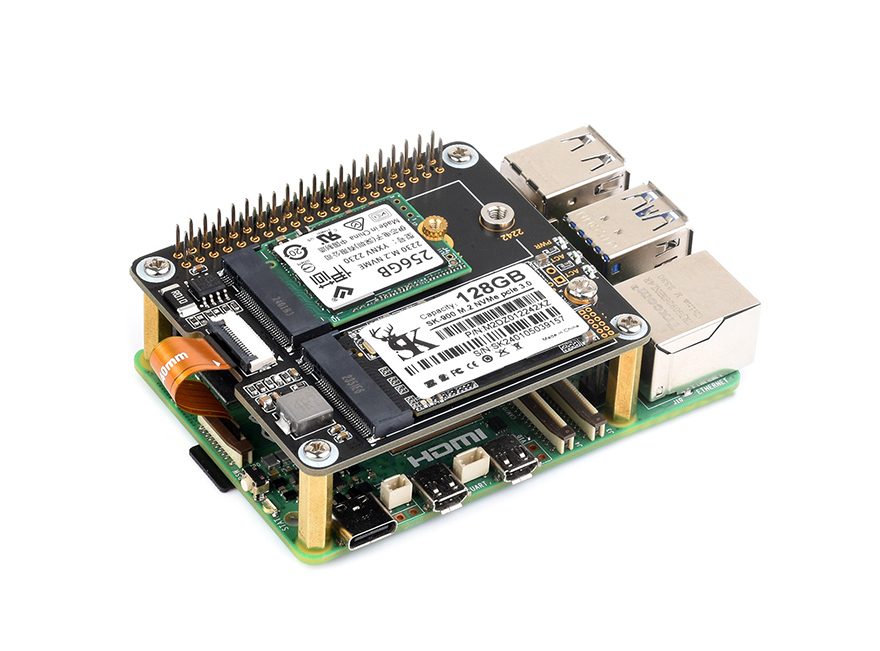
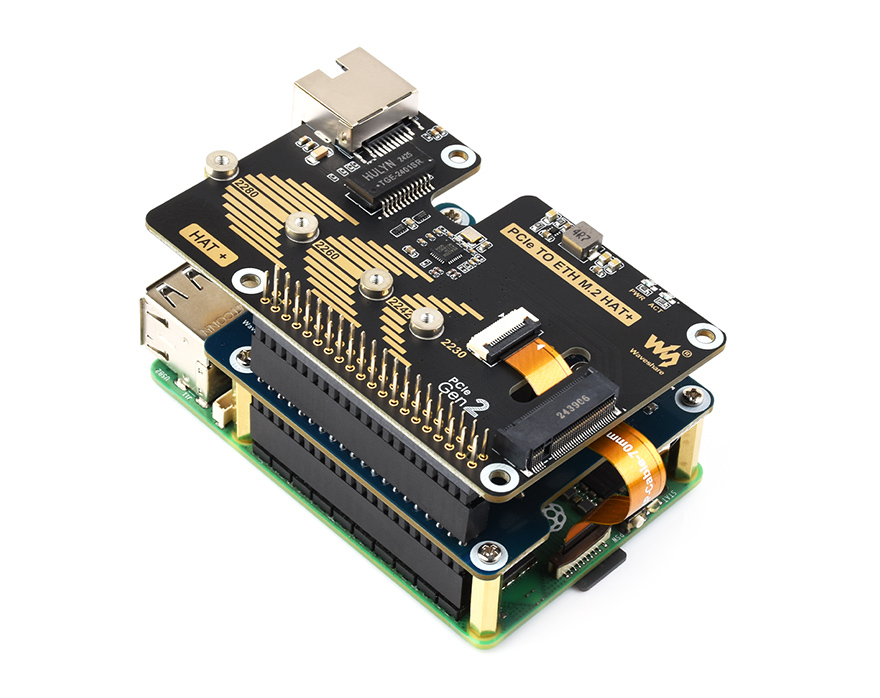
*Raspberry Pi and HAT shown for demonstration purposes only. Please refer to "What's in the box" for the detailed part list
Outline dimensions
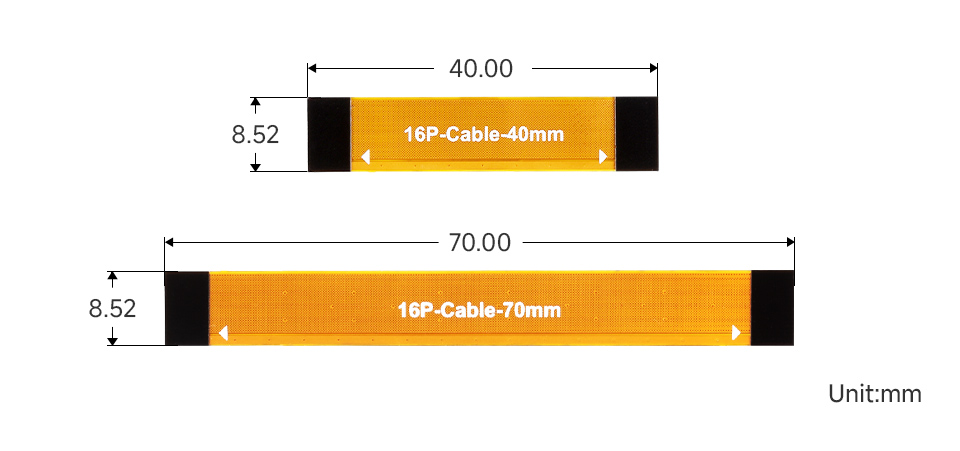
*Both sizes shown for demonstration purposes only
What's in the box?
1 x 40mm PCIe Flex cable

Features
- Low Noise, More Practical, With Thermal Tape
- Matching With The CM4 On Size And Mounting Holes, Fast Heat Dissipation
- Proper Space For Antenna Section(Antenna and CM4 are not included)
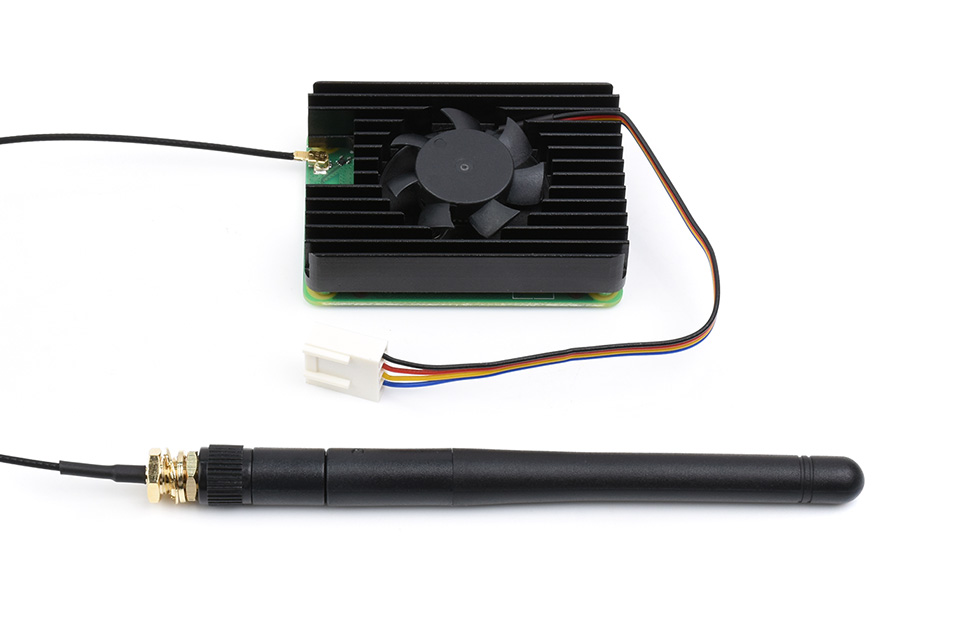
Specifications
| General | Low-profile, PWM speed adjustment |
|---|---|
| Interface | 4-wire PWM speed-adjustable fan header |
| Rated speed | 8000±10%RPM |
| Rated power | 1.6W (5V, 0.135±0.02A) |
| Cable Length | 125±10mm |
Outline dimensions
What's in the box?
1 x heatsink with fan
Take your micro:bit projects off the desk and onto the breadboard. This T-type breakout board slots your micro:bit into a standard breadboard. It brings the edge connector pins out to a neat, labelled row, so wiring up LEDs, buttons, sensors and modules is quick and mistake-free.
The onboard voltage conversion supplies both 3.3V and 5V. You can safely power the micro:bit and still run 5V components on the same breadboard. The regulated supply gives a smoother, more stable output than improvised power setups, which means fewer glitches and more reliable results.
Its compact T-shaped design keeps your breadboard free for components. That makes it ideal for classroom experiments, prototyping and quick tests.
Features
- Designed for the BBC micro:bit development board
- Onboard 3.3V–5V voltage conversion for smooth, stable power
- Plugs directly into a standard breadboard
- Clearly labelled pin breakout for easy, accurate wiring
- Small footprint leaves more breadboard space for your experiments
- Great for STEM education, beginners and rapid prototyping
Please note: micro:bit and breadboard not included.
Before publishing, check two details against the supplier's spec sheet. First, confirm it works with both V1 and V2 micro:bits. Second, check whether it supplies 5V from the input or converts 5V down to 3.3V. You could then add a line such as "Compatible with micro:bit V1 and V2" or "Input voltage: 5V". It's also worth suggesting a matching breadboard and jumper wire pack from your Electronics section as an add-on.
What's in the box?
1 x T-type GPIO Expansion Board for micro:bit
Take your micro:bit projects off the desk and onto the breadboard. This T-type breakout board slots your micro:bit into a standard breadboard. It brings the edge connector pins out to a neat, labelled row, so wiring up LEDs, buttons, sensors and modules is quick and mistake-free.
The onboard voltage conversion supplies both 3.3V and 5V. You can safely power the micro:bit and still run 5V components on the same breadboard. The regulated supply gives a smoother, more stable output than improvised power setups, which means fewer glitches and more reliable results.
Its compact T-shaped design keeps your breadboard free for components. That makes it ideal for classroom experiments, prototyping and quick tests.
Features
- Designed for the BBC micro:bit development board
- Onboard 3.3V–5V voltage conversion for smooth, stable power
- Plugs directly into a standard breadboard
- Clearly labelled pin breakout for easy, accurate wiring
- Small footprint leaves more breadboard space for your experiments
- Great for STEM education, beginners and rapid prototyping
Please note: micro:bit and breadboard not included.
Before publishing, check two details against the supplier's spec sheet. First, confirm it works with both V1 and V2 micro:bits. Second, check whether it supplies 5V from the input or converts 5V down to 3.3V. You could then add a line such as "Compatible with micro:bit V1 and V2" or "Input voltage: 5V". It's also worth suggesting a matching breadboard and jumper wire pack from your Electronics section as an add-on.
What's in the box?
1 x T-type GPIO Expansion Board for micro:bit, USB-C