
Generic1


Features
- Display Colour: Blue
- The black line connects to the negative and the red line connects to positive pole of power source
- Material: Plastic Shell
- Display Digit: 3
- Measuring Range: DC 4.5-30V
- Working voltage: 4.5-30V
- Overall Dimension: Approx. 28mm x 47mm x 21mm
This is a common model esp-01 breadboard adapter for esp8266 serial to WiFi transceiver module. Because the pin arrangement of ESP-01/ESP-01S is not breadboard friendly and has no label, it is not convenient for rapid prototyping. This breadboard adapter will help you make it easier to use the esp-01 module prototype. This breakthrough conveniently provides a clear lead out screen at the top and will be well suited to your favorite breadboard.
Last but not least, we added a 0.1μF decoupling capacitor, so esp-01 will always run smoothly without hindrance.
Soldering is required to fit the headers
What's in the box?
1 x ESP-01 Bread Board Adapter
2 x 4 pin headers
The ESP-01S is an upgraded version of the original ESP-01 module, built around the ESP8266EX chip from Espressif. It's a compact, low-cost WiFi module that adds wireless networking to any microcontroller project with minimal extra hardware.
Unlike the original ESP-01, the ESP-01S includes an improved onboard power management circuit, giving it more stable operation — particularly useful when connecting via USB-to-serial adapters that can't always supply clean, sufficient current. It also adds a blue status LED on GPIO2 for quick visual feedback during flashing or operation.
The module ships pre-programmed with AT command firmware, so it can be connected straight to an Arduino (or any 3.3V-tolerant microcontroller) via UART and controlled with simple serial commands — no additional firmware flashing required for basic use. For more advanced projects, it's also fully compatible with the Arduino IDE and NodeMCU/Lua firmware for custom programming.
Key Specifications:
- Chip: ESP8266EX (Tensilica L106 32-bit low-power MCU)
- WiFi: 802.11 b/g/n, 2.4GHz
- Flash memory: 1MB
- Operating voltage: 3.3V (do not connect to 5V)
- I/O voltage tolerance: 3.6V max
- Serial interface: UART (default baud rate 115200 bps; some firmware versions use 9600)
- Onboard status LED (GPIO2)
- Pin count: 8-pin (VCC, GND, TX, RX, CH_PD/EN, RST, GPIO0, GPIO2)
Typical uses:
- Adding WiFi connectivity to Arduino or other microcontroller projects
- IoT sensor nodes and remote monitoring
- Basic home automation and smart switches
- Low-cost prototyping before moving to a full ESP32/ESP8266 dev board
Note: The ESP-01S operates at 3.3V logic and is not 5V tolerant — a logic level shifter or direct 3.3V microcontroller connection is required when interfacing with 5V boards like a standard Arduino Uno. A separate USB-to-serial programmer (e.g. an ESP-01/ESP-01S USB adapter) is recommended for flashing custom firmware. We also stock a breadboard adapter for use in your projects.
What's in the box?
1 x ESP8266 ESP-01S WiFi Serial Transceiver Module
Respurces
Instructables.com offer some help on this board as well as on medium.com
Tired of holding down a button every time you want to flash your ESP-01 or ESP-01S? This little adapter takes care of that for you. It uses the CP2104 USB-to-serial chip along with an auto-download circuit, so your module drops into flash mode automatically — just plug in, hit upload, and you're good to go.
It plays nicely with all the usual tools — Arduino IDE, ESP8266 Flasher, and Lexin's FLASH_DOWNLOAD_TOOLS — so whether you're a first-timer flashing your very first "Hello World" or you're constantly tweaking firmware on a stack of ESP-01s, this adapter takes the fiddly part out of the process.
What it does:
- Plugs your ESP-01 / ESP-01S straight into USB for programming
- CP2104 chip handles the USB-to-serial conversion
- Auto download mode — no manual button-holding to get into flash mode
- Works with Arduino IDE, ESP8266 Flasher, and FLASH_DOWNLOAD_TOOLS
- Handles firmware flashing, updates, and serial debugging
Great for:
- Anyone building ESP8266 projects who's tired of the "button dance"
- Quick firmware updates without extra fuss
- IoT tinkering, prototyping, and general ESP-01/01S experimentation
What's in the box?
1 x ESP-01/ESP-01S CH340 USB Programmer with Switch

Specifications
- Colour: Black
- Buzzer Type: Piezoelectric
- Sound Pressure Level 85 dB
- Rate Voltage: 12V DC
- Operating Voltage: 3 - 24V
- Max Current Rating 11mA
- Frequency 3900±500Hz
- Drive Method: Drive Circuit Built in
- Mounting Holes
What's in the box?
1 x Piezoelectric Buzzer
Resources
- Python library
- Using a Buzzer With a Raspberry Pi

- This product is mainly used for water metering
- High amplitude ≥ 4.6V
- Low amplitude ≤ 0.5V
- Electric strength 1250V/min
- Insulation resistance ≥ 100MΩ
- Hydrostatic pressure testing ≤ 2.0Mpa
Specifications
- The lowest rated working voltage: DC4.5 5V-24V
- Maximum operating current: 15 mA (DC 5V)
- Working voltage range: DC 5~18 v
- Load capacity: ≤ 10 mA (DC 5V)
- Use temperature: ≤ 80°C
- Operating humidity range: 35%~90%RH (no frost)
- Allowing pressure: pressure 2.0Mpa
- Temperature: -25~ 80 °C
- External threads: 1/2"
- Outer diameter: 20mm
- Intake diameter: 9mm
- Outlet diameter: 12mm
Application
Water heaters, water vending machines, flow measurement
What's in the box?
1 x Water flow sensor
Resources
Flow sensor Wiki
An instructable on how to use the Flow Sensor with Arduino
Adafruit experiment connecting the Flow Sensor to a Raspberry Pi
https://www.ardumotive.com/water-flow-sensor-en.html
RPi: https://www.youtube.com/watch?v=8JXd-2_zJQ0

- Joystick Size: Approx. 95x60x100mm
- Encoder Board Size: Approx. 85x35mm
- USB Cable Length: Approx. 1.8m
- Colour: Red
We have tested this unit on Raspberry Pi using Retropie and a Windows 7 PC using MAME.
What's in the box?
1 x Encoder Board
1 x USB Cable
1 x 5 pin Cable for Joystick
1 x 5 Pin Joystick
8 x 30mm Push Buttons
2 x 24mm Push Buttons
10 x Cables for Buttons
Resources
Get Retropie on the Raspberry Pi
ModMyPi setup guide

Hack this component to form part of your weather station.
Specifications
| Sensor | 3-cup anemometer |
| Measurement Description | Wind speed |
| Range | 0 to 45 m/s (0 to 100 mph) |
| Starting Threshold | 0.45 m/s (1.0 mph) |
| Accuracy | 0.11 m/s (0.25 mph) or 1.5% |
| Contact Rating | 10 mA (maximum) |
| Operating Temperature Range | -50° to 70°C |
| Distance Constant |
|
| Cable Description | Quick-connect connector with vinyl jacketed, shielded cable |
What's in the box?
1 x Anemometer
Resources

The 1/2" 2 way, 90 Degree, 2 port 12 V DC NPT Normally Closed Electric Solenoid Valve converts electrical signals to pneumatic functions as part of a larger system that allows users to interlock, isolate, and connect individual units of a larger operation.
DC 12V Electric Solenoid Valve 1/2 Inch Hose Magnetic Water Air Inlet Flow Switch
Specification:
| Material | Metal Plastic |
| Color | As per picture |
| Voltage | DC12V |
| Rated Power | 5W |
| Pressure | 0.02- 0.8Mpa |
| Interface Modes | 1/2'' Hose |
| Working Time | 5 hours at once (Max) |
| Insulation Class | E |
| Fluid Temperature | 0-90°C |
| Size | L*W*H/75*60*45mm/2.95*2.36*1.77'' |
| Inner diameter | 14mm/0.55'' |
| External diameter of thread | 20mm/0.78'' |
1 x Electric Solenoid Valve
Please note:
The actual valve size in the unit is smaller than the port size as you will find with most taps.

Specifications
- Model: F695ZZ
- Material: Chrome Steel
- Size: 5mm x 13mm x 4mm
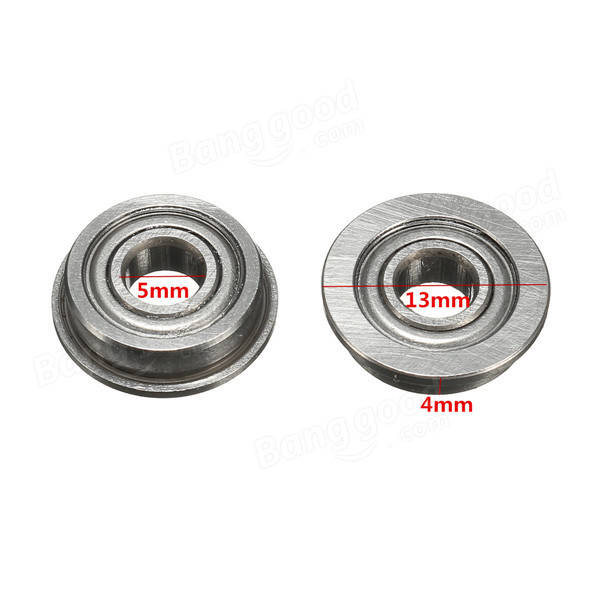
- Easy to install and replace.
- Less friction and higher speed.
- Smooth operation, high accuracy.
- Durable.
1 x Ball Bearing

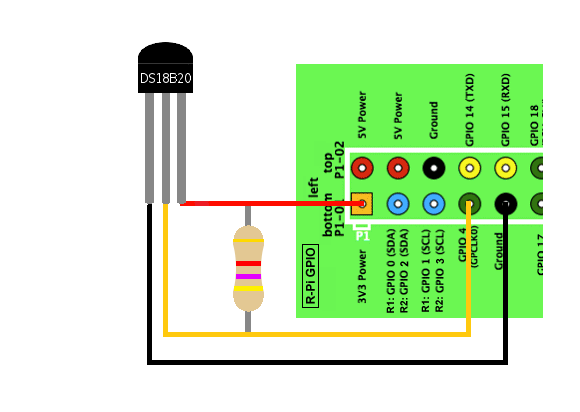
- Temperature measurement range: -55°C ~ +125°C
- Accuracy: ± 0.5°C
- Encapsulation: TO-92
What's in the box?
1 x DS18B20
You will also need a 4.7k resistor
Resources
https://learn.adafruit.com/adafruits-raspberry-pi-lesson-11-ds18b20-temperature-sensing/overview

Specifications
- Type:Field-Effect Transistor
- Brand Name: International Rectifier
- Package Type: Throught Hole
- Model Number: IRFZ44NPBF
- TO-220AB: MOSFET N-Channel, Metal Oxide
- 55V 49A: FETs - Single
- Mosfet Type : N-channel
- Current Rating : 49A
- Rds (On) : 17.5mΩ
- Voltage Rated : 55V
What's in the box?
1 x IRFZ44N Transistor
Resources
Introduction to Transistors
Different Types of Transistors and Their Working

Specifications
- 250 V
- 3A
- 10mm x 15mm
1 x Black Mini Rocker Switch
Resources
Python library
Introduction to Buttons and Switches
Types of buttons and switches
Strip board is Ideal for development and prototype work and intended primarily for wiring discreet components, particularly in analogue circuits.
Specifications
- Type: Single Sided
- Base Material: Bakelite
- Thickness: approx. 1.5mm
- Hole Pitch: approx. 2.54mm
- Hole Diameter: approx. 1.0mm
- Size: approx. 65mm x 145mm
What's in the box?
5 x DIY Prototype PCB Board
Resources
Introduction to soldering
Video: How to solder properly
The secrets to good soldering

Rocker Switches house a button for operation that can be pressed on either end like a seesaw to connect or disconnect an electrical circuit. They are often used as ON/OFF switches on the main power supplies for electronic devices.
Features
- Rating: 3A 250V
- Mounting hole: 20mm
- Poles: SPST
- Terminal: 2-Pin(ON-OFF)
- Contact resistance: ≤30mΩ
- Insulation resistance: ≥100MΩ at 500V DC
- Dielectric strength: 1500V AC for 1 minute
- Operating temperature: -25°C - 85°C
- Electrical life: 10000 cycles
- Colour: black
What's in the box?
1 x Mini round black rocker switch
Resources
Introduction to Buttons and Switches
Types of buttons and switches

The AS3935 Franklin Lightning Detector gives you lightning detection for your next weather project. This sensor is capable of detecting lightning up to 40 km away with an accuracy of 1km to the storm front! On the product is a sensitive antenna tuned to pick up lightning events in the 500kHz band. When sensing an event the AS3935 utilizes an interrupt to the interrupt pin, distinguishes between false and real lightning events, and has a number of features to help calibrate lightning detection. For example, there are settings for detecting from indoors or detecting from outdoors, settings to change the threshold for false events, and settings to be alerted only after a certain number of lightning strikes to name a few. We've also written an Arduino Library to get you prepared for that upcoming storm!
The product is capable of communicating over SPI or I2C and sports a Qwiic connector for fast implementation without the need for soldering.
Fully Calibrated Digital Lighting Sensor AS3935 Lighting Detector Breakout Board Module SPI I2C Interface Strikes Thunder Rainstorm Storm Distance Detection Compatible for Arduino RPi
Features
- Wide Supply Voltage range : 2.4V - 5.5V
- Lightning Sensing: 40 km Range with accuracy of 1km in 14 steps
- Detects both cloud-to-ground and cloud-to-cloud flashes
- Embedded ‘man made’ disturbance rejection algorithm
- Programmable Detection Levels,Lightning detection thresholds are programmable (outdoor vs indoor, for example)
- Distance to storm estimation
- "Disturber" (false event) rejection algorithm
- Indoor and Outdoor Settings
- SPI and I2C Interfaces
- Qwiic Enabled
Application - DIY Weather stations
What's in the box?
1 x Lightning Detector sensor
This tiny but powerful 30mm fan can be used in any electronic projects, with MCUs, and even to keep your Raspberry Pi cool.
Now with a narrower form factor to fit a wider range of enclosures
Specifications
- Dimensions: 30x30x07mm
- Bearing Type: Sleeve
- Connector: 2PIN
- Rated Voltage: DC 5V, Rated Current: 0.1A
- Airflow: 4.2CFM
- Fan Blade: 7 Blades
- Fan Speed: 5000RPM±10%
- Noise Level: <16dBA±10%
What's in the box?
1 x DC Fan 30x30x7mm
4 x M2.5 x 14 screws
4 x M2.5 nuts
Resources
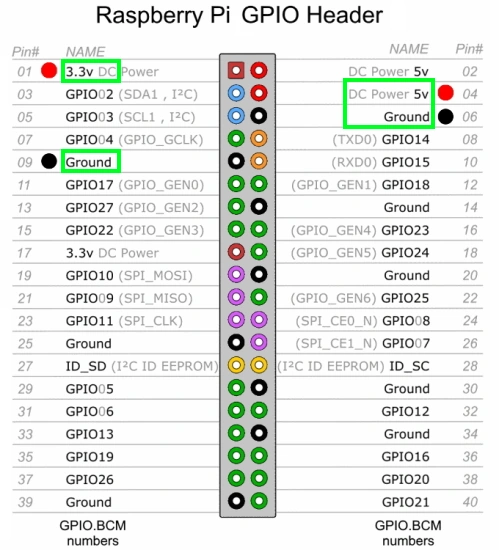
3.3V connection to the GPIO on the left and 5V on the right.

Features
- Name: MPU-6050 module (three-axis gyroscope triaxial accelerometer)
- 2.54mm pin spacing
- MPU-6050 Accelerometer Gyro
The MPU-6050 sensor contains a MEMS accelerometer and a MEMS gyro in a single chip. It is very accurate, since it contains 16-bits analog to digital conversion hardware for each channel. Therefor it captures the x, y, and z channel at the same time.
Specifications
- 16bit AD converter-chip, 16-bit data output
- Use Chip: MPU-6050
- Power supply :3-5v (internal low dropout regulator)
- Communication: IIC communication protocol standard
- Gyro Range: ± 250 500 1000 2000 ° / s
- Acceleration range: ± 2 ± 4 ± 8 ± 16g
- Using Immersion Gold PCB, welding machines to ensure quality
- Size: 20mm x 16mm x 10mm
Application
- Motion sensing games
- Augmented Reality
- Electronic Image Stabilization (EIS: Electronic Image Stabilization)
- Optical Image Stabilization (OIS: Optical Image Stabilization)
- "Zero-touch" gestures User Interface
- Pedestrian navigation
- Gesture shortcuts
Market
- Smart phone
- Tablet device
- Handheld games
- 3D remote controller
- Portable navigation devices
What's in the box?
1 x MPU-6050 module

RFID module
MF522-AN module adopts Philips MFRC522 original reader circuit chip design, easy to use, low cost, suitable for equipment development, development of advanced applications such reader users, the need for RF card terminal design / production of the user. This module can be loaded directly into a variety of readers molds. Module uses voltage of 3.3V, through the SPI interface simple few lines can be directly connected to the user any CPU board communication module can guarantee stable and reliable work, reader distance;
Specifications
- Support: S50/S70 and other ISO14443A card
- Operating system: Windows 98/XP/2000/CE/7/ME/NT/LINUX
- Reading distance: 0-8 cm
- Reading speed: 0.2S
- Working temperature: -20 C - 85 C
- Working voltage: 5V
- Working current: 200mA
- Work instruction: LED, Beeps
What's in the box?
1 x USB reader
1 x USB cable

Specifications
- Material: oxygen-free copper
- Female : Europe CEE7/16
- Male: IEC320 C14
- Cable Type: H03VVH2-F
- Wire diameter: 2 x 0.75mm2
- Voltage: 250V
- Amperage : 10A
- Cable Length: 30cm
What's in the box?
1 x EU adapter for UPS