
Generic2


Specifications
| Lead screw | |
| Material | stainless steel |
| Diameter | 8mm |
| Pitch | 2mm |
| Lead | 4 |
| Total Length | 400mm |
Screw nut | |
| Material | brass |
Diameter | 8mm |
| Pitch | 2mm |
| Lead | 4 |
Mounted ball bearing | |
| Material | zinc alloy |
| Bore diameter8 mm | 8mm |
| Total length | 55mm |
| Height | 29mm |
Shaft coupling | |
| Material | aluminium |
| Shaft | 6.35 x 8 mm |
| Length | 25 mm |
| Diameter | 20mm |
Motor | |
| Voltage | 24V |
| Step angle | 1.8° |
| Accuracy of step angle | ±5% |
| Accuracy of resistance | ±10% |
| Accuracy of inductance | ±20% |
| Insulation resistance | 100mΩmin 500VDC |
| Radial clearance | 0.02Max |
| Axial clearance | 0.08Max |
| Radial maximum tolerance | 28N |
| Axial maximum tolerance | 10N |
- 3D printer T8 400mm Stainless Steel Lead Screw Screw nut Mounted ball bearing Shaft coupling Motor.
- Screw mainly use for Stepping motor driving guide rail,machine tool, and other equipment.
- Screw without processing, direct connected to bearing.
- T shape design, make of high quality stainless steel material.
- Easy to install and convenient to use.
- Fine producing and practical.
- Suitable for Industrial automation equipment, stepper motor rails;
- Fit for 3D printer; engraving machine; XYZ module; slider; lifts ect.
What's in the box?

Easily pan or rotate your camera on your robot or other projects with this bracket kit.
Specifications:
- Specially designed for R/C car and robotics projects
- pan/tilt 180 degrees
- hold ultrasonic sensor, IR sensor, camera or other sensors.
- suitable for use with SG90 servos not included.
What's in the box?
1 x Cradle head parts
1 x Pack of screws

Although the reader does not read the information on the NFC card, it is triggered by a 125 khz NFC card

This is a popular OLED display with Portable and wearable devices becoming the new trends.
Specifications
- Driver: SSD1306
- Interface type: IIC interface
What's in the box?
1 x OLED display
Resources
Pin definition: GND, VCC, SCL, SDA
- GND(OLED power supply)
- VCC (OLED 3.3~5V)
- SCL(OLED IIC Clock line)
- SDA(OLED IIC Cable)
We used these instructions to get it working on Pi: https://circuitdigest.com/microcontroller-projects/ssd1306-oled-display-with-raspberry-pi

Single-core tinned copper wire is used, which is easy to weld and anti-oxidation, and is not easy to break. The copper wire can withstand a high temperature of 80°C, making it suitable for a variety of thermal overload applications. The single-strand copper core has strong resistance to tension and surge current, which is convenient for shaping. Packaged by reel, the copper core has a moderate diameter and clear lines, making it easy to use and store. Copper wire is suitable for welding notebooks, motherboards, LCD screens, displays and other circuit boards.
Features
- Material: Plastic and Metal
- Total length of about 250M
- Line: 30AWG
- Single sheath outer diameter of about: 0.55mm, copper core diameter of about 0.25mm.
- Temperature: 80 degrees, single-strand copper crossing tin, have antioxidant effects.
What's in the box?

This complete robot car kit includes the arduino as well. Just add batteries and code. Great for beginners to learn how to code using sensors and motion on the Arduino boards
What's in the box?
1 x Car chassis
2 x Car Wheels
2 x DC Gear Motor
2 x 20 line gun code disk
4 x Fasteners (high intensity black acrylic)
1 x Caster wheel
1 x Four battery box
1 x Quality Rocker Switch
1 x Assembly drawing
1 x V5 shield
1 x UNO R3
1 x SG90
1 x FPV
1 x L298N
Several screws and nuts
Resources
Pdf manual available at http://www.cs.columbia.edu/~sedwards/presentations/robot-car-instructions.pdf
Get more details at https://create.arduino.cc/projecthub/hda-robotics/project-1-2wd-obstacle-avoiding-robot-390ef8


Use box-type bearing module, the maximum extent to ensure the stability of operation of the print head, while ensuring stability in the premise, as far as possible to simplify the design and reduce the weight of the printhead mounting base on the maximum.
Aluminum alloy, surface sandblasting treatment, more texture.
Suitable for Reprap Prusa i3 3D printers use, shaft pitch can be adjusted to ensure suitability mounting base and prints.
After sandblasting surface treatment products more attractive, scratch-resistant.
Specifications:
Type: E3D V6
Material: Metal
Bracket Width: 35.6mm
Holder Height: 50mm
Holder Depth: 33.6mm
Fit for: 3D Printer Extruder
Package Includes:
1x E3D V6 Bracket

INA219-40 c to 85 c temperature range and can realize the maximum error of 1% accuracy, maximum offset of 100 uV.The advantage of the high precision of the product in combination with 12 resolution, can help clients as much as possible, reduce the pressure drop on the shunt resistor, which can minimize the power loss and power consumption, and saving board space.The device epic of 26 bus voltage range of 0 V to V.
Features
- Calibration programmable registers can directly read its unit of measure is the ampere current, and power in watts per read.
- For as many as 128 sampling averaging, in order to realize filter in noise environment.
- The I2C interface has a timeout, not only can avoid the bus lock, but also can provide high-speed mode, meet the communication requirements of up to 3.4 MHz.
- All features are support software programmable INA219.
- Using single power supply, the working voltage between 3.0 to 5.5 V.
What's in the box?
1 x INA219 board

These connectors are made from high-temp nylon with gold-plated spring pins or sockets molded in. The shape of this generic XT60 prevents reverse polarity, and when plugged in the connection is super-solid. Perfect for applications up to 65A continuous draw.
- Solid and durable.
- Ensures high-amp connection.
- Low resistance for high current capacity.
- Superior technology suited to today's high power applications.
- Ergonomically designed and easy to grip.
- Easy to un-solder and reuse.
- Used in RC battery and motor projects
Specifications
- Model: XT60
- Colour: Yellow (as picture)
- Size: Approx. 23mm x 16mm
- Material: Copper PA66
1 x pair XT60 Bullet Connector Plugs(1 x Male 1 x Female)

Turn your ATX PC power supply into a handy test bench power supply.
- -12V
- 12V
- 5V
- 3.3V
Each output channel has a replaceable 5A fuse and corresponding ground connection with binding post easy to connect
Provide quick access to the typical voltages needed including 3.3V, 5V, 12V and -12V.
The power indicator and power switch easy to control ideal to DIY low voltage power supply for developing physical computing projects (embedded systems)
Specifications
- Product name : ATX power supply board
- Model : XH - M229
- Compatible with port: ATX (compatible with partial BTX type)
- The PIN number: 24 pin
- Switch : Yes
- Number of sets of output : Four sets of different voltages
- Size:48mm x 128mm x 30 mm
What's in the box?
1 x Power Chassis

As micro:bit is gaining traction in this region, powering it is a must :)
If you are new to micro:bit, it is a powerful embedded platform or microcontroller board with easy to get started features, even easier than Arduino. It can be powered by USB micro B when loading the program, or you can use 2 x AAA batteries. So here comes the battery holder for this microcontroller.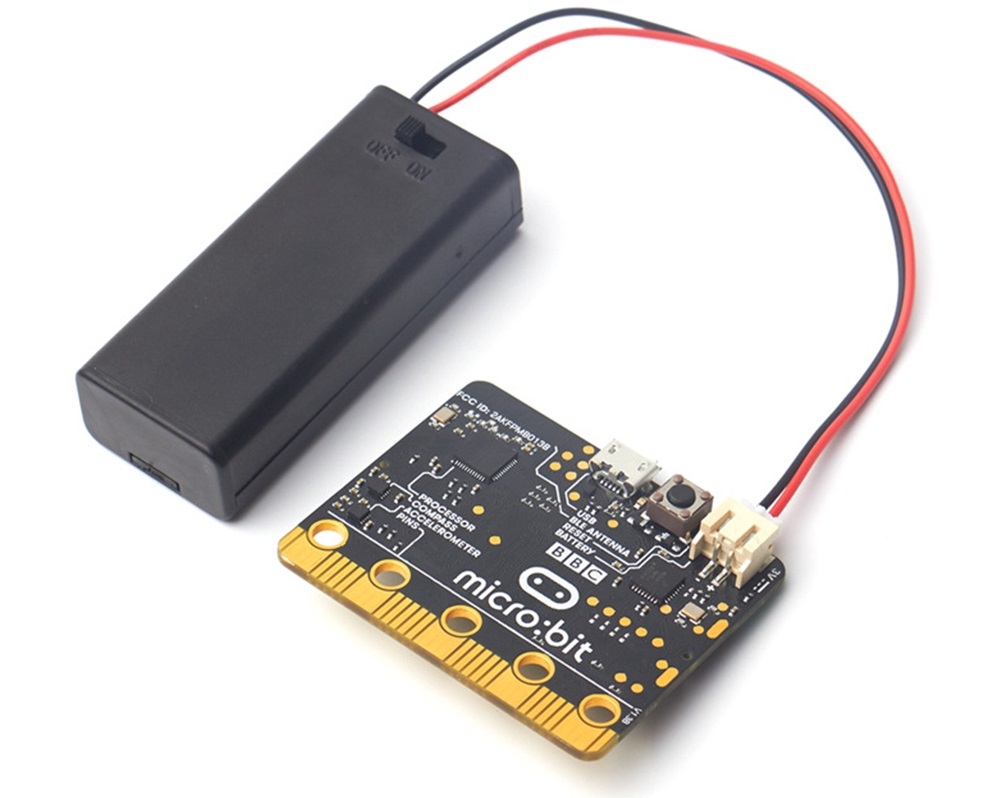
This is a 2 x AAA battery holder for micro:bit with cover and ON/OFF slide switch. Neat!
Note: Battery & micro:bit is not included.
Features
- Terminated with 2-way JST connector, match with battery input on
- micro:bit
- Holder for 2 x AAA batteries
- ON/OFF slide switch
- Comes with cover
What's in the box?
1 x Battery Holder with On/Off Switch
Need batteries? You will find our battery selection here

Features
- Material: Plastic
- Indoor temperature °C display.
- It comes with a mounting clips which allows it to be panel mounted
- Temperature range: -50 ~ 70 Degrees.
- Usage temperature: -10 ~ 50 Degrees.
- Usage humidity: 5% ~ 80%
- Accuracy: /-01 Degrees.
- Distinguishing temperature: 0.1 Degrees.
- Power: 2 x DC1.5V LR44 button batteries (Not included)
- Cable length: 0.8M.
- Size: 48 x 28 x 15(mm)
- Colour: Black
What's in the box?
1 x LCD Digital Thermometer Temperature Sensor

In order to properly seat your Bowden tube, it is key to have a clean, square end. Without this, you risk oozing, or worse, clogging in the hot end. This super-sharp tubing cutter is the perfect tool for obtaining a clean, square cut in your tubing, every time.
Features a stainless steel blade and switch button. The housing is made from tough durable plastic. Can also be used to cut filament. But do not use as a wire cutter or you will dull the blade.
What's in the box?
1 x Tube Cutter

Compatible with USB 2.0, it provides full isolation at 12 Mbps data rates. With isolation of 1500V, it has no external power supply, no driver required.
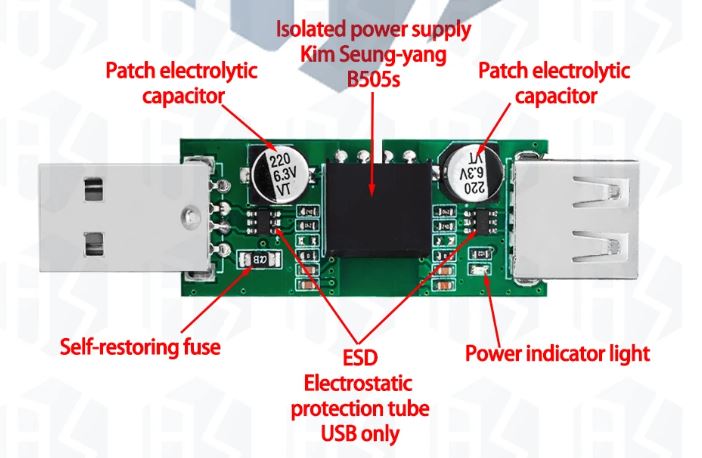
- Driver-free, easy to use to use.
- Support USB full speed 12Mbps does not support pure high speed equipment.
- Support USB control transfer, batch transfer, interrupt transfer, sync/isochronous transfer.
- ADUM3160 isolation voltage: 2500V
- Power module isolation voltage: 1500V
- Power supply: taken from the computer host USB port
- Operating environment: -40 °C to 85 °C
- Dimensions: 15mm x 25mm x 66mm

Great for short distance DC connections
Specifications
- Supports maximum current 3A
- Material: PVC
- Length: 1000mm(approx)
- Colour: Black
What's in the box?
1 x DC 5.5 x 2.1mm Male To 5.5 x 2.1mm Power Cable

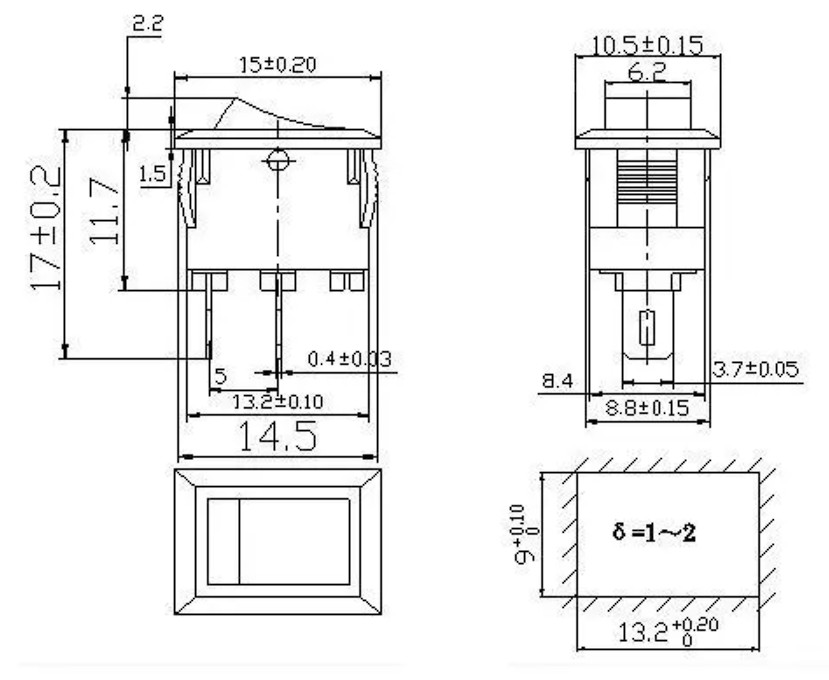
Rocker Switches house a button for operation that can be pressed on either end like a seesaw to connect or disconnect an electrical circuit. They are often used as ON/OFF switches on the main power supplies for electronic devices.
Specifications
- 250 V
- 3A
- 10mm x 15mm at the top
What's in the box?
1 x Mini Rocker Switch
Resources
Python library
Introduction to Buttons and Switches
Types of buttons and switches

Please Note: Only for use with 2.5inch notebook HDD and SSD, not for use with 3.5 inch desktop HDD
Features
- Comply with serial ATA2.0 standards.
- Compatible with USB port (1.0,1.1 &2.0) & SATA Hard disk (1.5 GB/S & 3 GB/s).
- Added USB2.0 independent power supply interface, support 2.5 "high-capacity memory driver.
- Compatible with Windows 7 (32-bit/64-bit)/Vista (32-bit/64-bit)/XP (32-bit/64-bit)/server 2003 & 2008 (32-bit/64-bit) system A
Specifications
- Adapter SATA III USB 3.0 Cable External Hard Drive USB to Serial ATA 22pin Converter Hard Disk 6 Gbps for 2.5" HDD/SSD.
- This USB 3.0 to SATA Converter Cable connects any standard 2.5 inch SATA Hard Drive or Solid State Drive (SSD) to a computer through USB 3.0 ports. It's a ideal for you to backup files or upgrade your notebook hard driver.
- SATA 3 specification Support speed up to 6Gbps;
- Easy and quick access to external storage;
- LED activity indicator;
- Fully compatible with USB 3.0 and backwards compatible with USB 2.0/1.1;
- Plug and play,hot-swapping;
- Support Windows 98/2000/XP/Vista/7/8, Mac OS X.
What's in the box?
1 x Sata Cable for 2.5" SSD/HDD

- Button/Coin compact design enclosure with On and Off Switch.
- Perfect for soldering, perfect for robotic ,electronic, and restoration projects.
- Holds one CR2032 coin batteries.
- Output: 3V
- Colour: Black
What's in the box?
1 x CR2032 battery holder with switch
Need batteries? You will find our battery selection here

If you own an Arduino UNO R3, you might need this case/enclosure :) This is pretty simple yet practical casing designed for Arduino UNO. It offers plenty of inner space, and if you need to access the GPIO of Arduino UNO, the top cover has an opening for it. It is perfect casing for educator, beginner, or maker that need to access the GPIO. With its transparent color and build using ABS to provide rugged protection to your Arduino UNO.
The case comes in two parts so you can simply snap it together, no screws or nuts needed. There is a base plane, where you should place the Arduino UNO board. Arduino UNO fit into the base plane nicely, no screw is needed to secure the Arduino. The best part for this enclosure is you can access all the pins and ports on the Arduino UNO. This case suitable for Arduino Uno Rev3 and also Uno Compatible (CH340).
Note: If you want to use this case with Arduino Uno Rev3, you need to remove the base first before putting it into this case.
Features
- Protective case designed specifically for Arduino Uno R3.
- The case is a two-piece injection-molded that snaps together around for Arduino. Holds the board firmly in place.
- It provides tough protection for Arduino UNO while providing access to all connectors.
- Easy access to each header, USB port, power jack, the reset button, etc.
- Includes reset key for use with the Uno's reset button. Secondary screw-mounting points for securing for Arduino.
Note: Arduino UNO board not included in the packing list.
Specifications
- Colour: Transparent
- Material: ABS
- Product Size: Approx. 7.5cm x 6cm x 1.7cm
- Weight: About 25g
Note: Not Suitable to open and close the case frequently (Clip may break easily). It may be softer than normal ABS casing.
What's in the box?
1 x Enclosure for Arduino UNO - Transparent