
Generic3


Simple ON and OFF switch. This is a panel-mount SPDT (single pole double throw) toggle switch.
This 3 pins toggle switch is great for any project where you have two options to select between. Maybe you'll be selecting between two voltages? Two audio outputs? Two sensor inputs? It's up to you! It's short, sweet, blue, and to the point! The part is marked at 3A 250VAC and 6A 125VAC but we haven't tested it at such high current/voltages and don't recommend it for more than 2A at 24V.
- SPDT 3 Terminal ON-ON 2 - Position Latching Toggle Switch.
- Each switch is assembled with two hex nuts, a flat and a locking washer.
- Easy installation, fits into any 6mm hole.
- Stated Electrical Spec: 3A 250VAC or 6A 125VAC, but we recommend using it at 2A at 24V

Relays are always good to have especially for electronics projects. The relay itself offers two main benefits:
- Isolation of low voltage system against high voltage system, example 5VDC and 240VAC
- Allow electronics with low voltage to control high power load, for example from Arduino to AC light bulb.
This is not an ordinary Relay breakout. It comes with 1 (single) channel 3.3V activation relay, ready to control 250VAC at 10A. Extra isolation with optocoupler at the front of control and the activation logic for the relay is configurable via a mini jumper. In simple words, the relay can be configured as 3.3V(High) activation or 0V(Low) activation. This is the universal Relay breakout board and we like it.
It comes with three (3) screw terminals for the relay output:
NO (Normally Opened),
NC (Normally Closed),
COM (Common),
and screw terminals for the control signal from a microcontroller such as Arduino or micro:bit. The control signal is optoisolated, protected. It even comes with power and activation indicator LEDs for the relay. Easy to use and suitable for beginners, and of course students too.
Input power and signal:
- DC+ = +3.3VDC
- DC- = GND (Ground or 0V)
- In1 = Control signal, 3.3V as logic High; 0V as logic Low
If you need to control AC or high current, high voltage load, this will be the perfect board.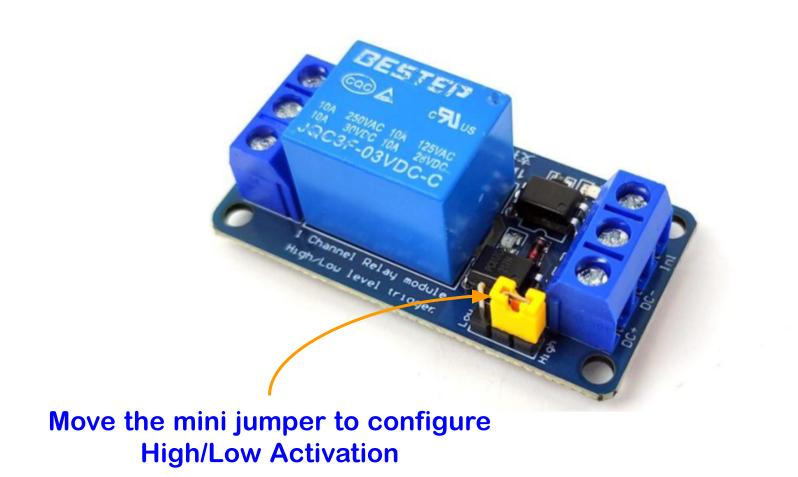
Note: We notice the DC+ and DC- need to be 3.3V and the In1 (control signal) needs to be 3.3V or Ground to make it works properly.
- 3.3V One (single) channel relay module
- Configurable Activation Logic, High or Low, via mini jumper
- Maximum Current Rating: 10A
- Maximum Voltage Rating: AC 250V
- Can control various appliances with large current and high voltage
- Can be controlled directly by 3.3V microcontrollers such as Arduino, micro:bit.
- Build-in an Opto-Isolator for extra isolation and protection to the controller.
- A power indicator LED, and another relay activation indicator LED
 Warning
Exercise proper caution when connecting mains driven equipment or appliances to relay module as lethal current will be present.

This rotary grinder is designed for carving, engraving, grinding, removing, sharpening, sanding, polishing, drilling etc. It's suitable for 3D printed part post-processing to clear unwanted material like printing support, elephant legs issues, hole clearance and so on. Very convenient to hand carry since lightweight and its power input of 5V (USB Type A), you can get power sources easily nowadays, like phone chargers, power banks, USB ports on your laptop/PC or even inside your car.
Note: The 5V power adapter is NOT INCLUDED
Product Detail
- Product Weight: 130g
- Power Source: DC 5V (USB Type A)
- Speed: 3000 - 20000 rpm (adjustable)
- Body Material: ABS
1. Durable And Reliable - Small size, lightweight, easily carried, comfortable grip handle, offers better control while drilling or grinding, convenient to use.
2. Adjustable Speed - Min speed 3000rpm, can up to 20000rpm.
3. Heat dissipation design with front and rear cooling holes, fast heat dissipation and prolonged lifespan.
4. Power jack/socket for USB power supply is more convenient, USB to plug cable is given
5. Direct insert drill bit socket design, just insert the drill bit directly without any tightening
6. Come with 6 different types of bits and 6 pcs of cylinder sandpapers (2pcs coarse, 2pcs medium, 2pcs fine)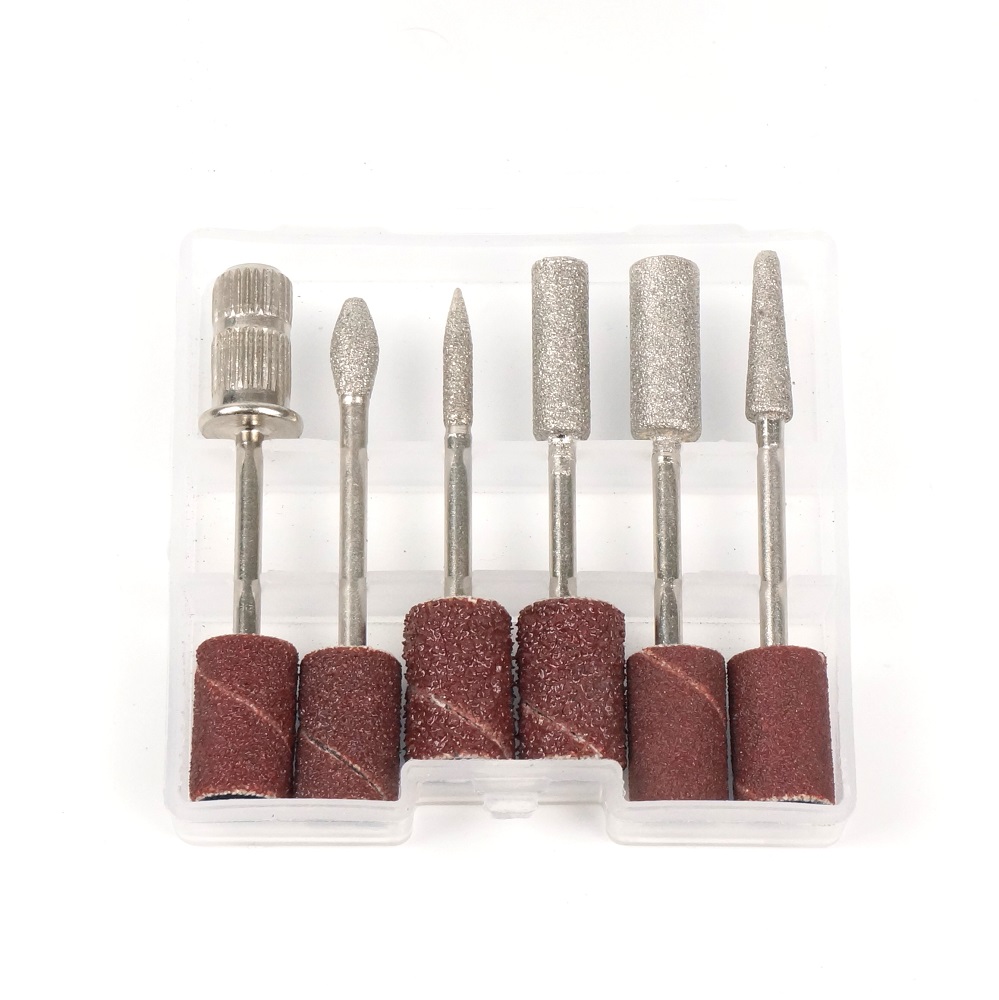
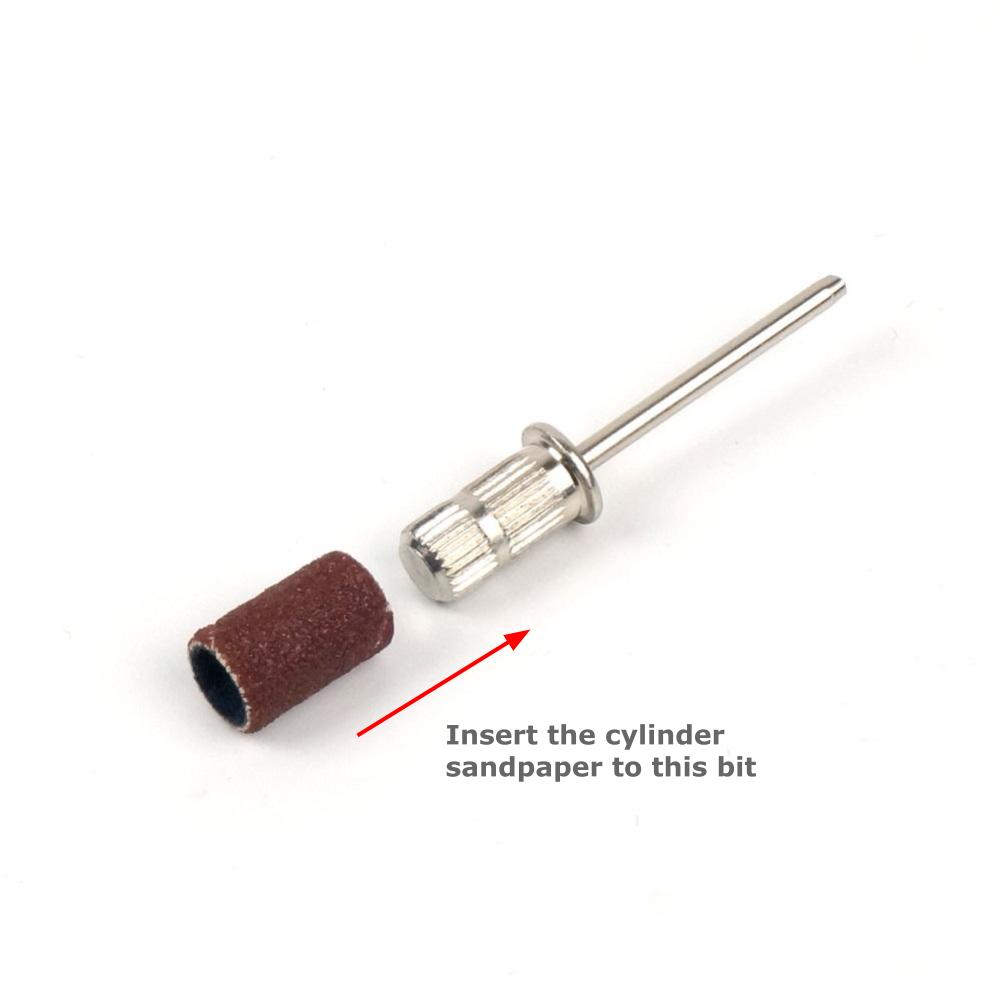
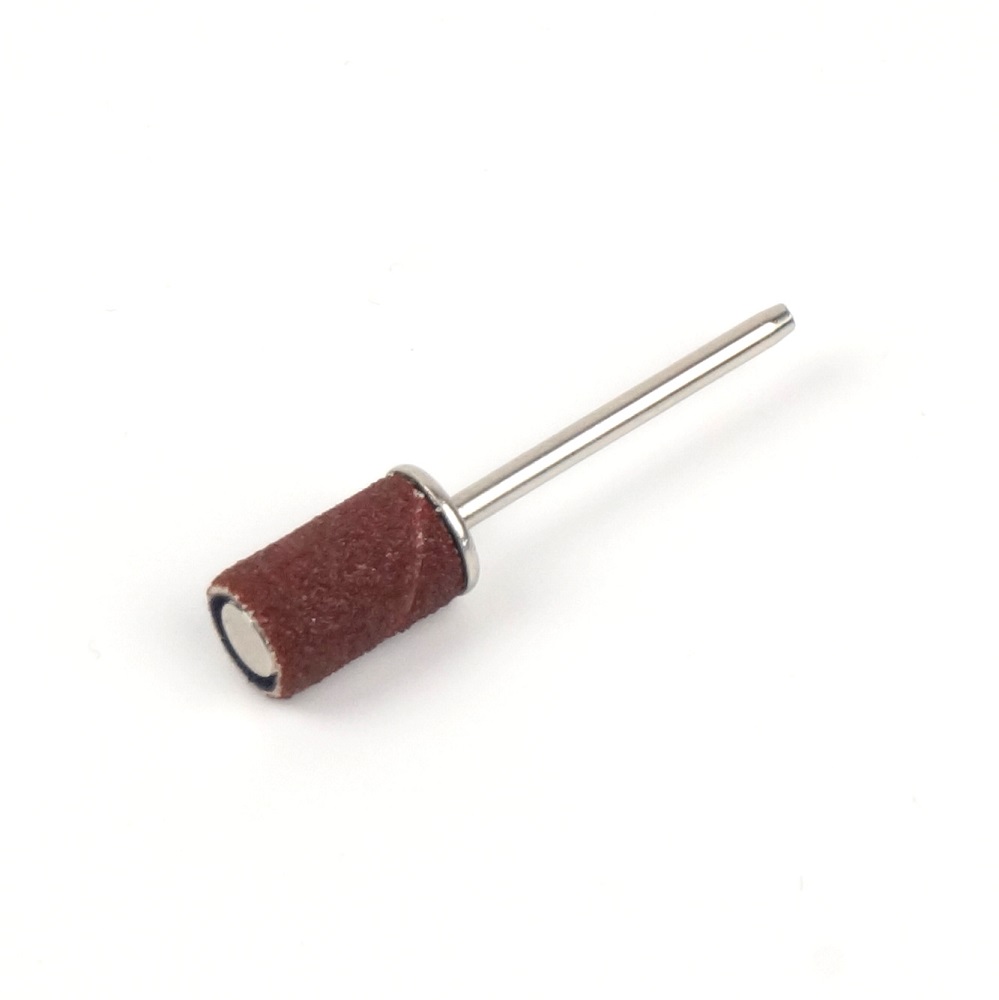
7. This rotary grinder kit is necessary for DIY carving and grinding. It is suitable for wood carving, grinding aluminium plate, thin copper board, plastic board, chipboard, printed circuit board, and epoxy board
1 x USB to Power Plug Cable
1 x Grinder Bit Set
- 6 x different type bits
- 6 x cylinder sandpapers (2 x coarse, 2 x medium, 2 x fine)

This Deburring Tool includes a 360 rotational handle with a stainless steel blade that has the optimal profile for deburring 3D-printed plastic parts. If you buy with a blade set, you will get an extra 10pcs blade.
Note: To change the blade and open the top cover, you need to press the button in the red circle.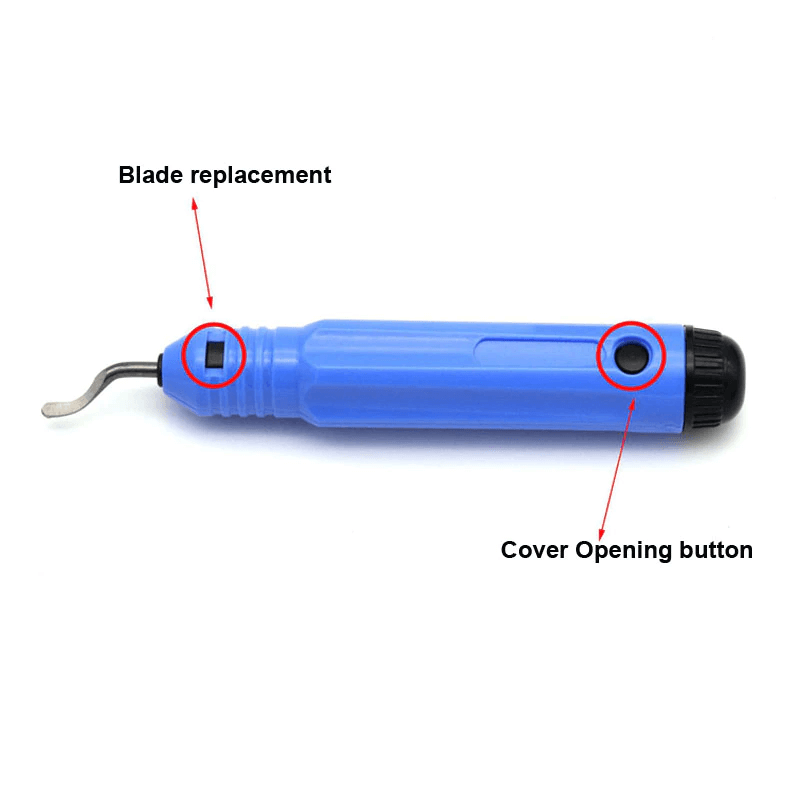
- Sharp & Durable Material - The blades are made of HSS high-speed steel. You could deburr pipes and assorted machined parts such as PVC or ABS pipes, Soft Metal (Aluminum, Copper), and Wood
- Rotary Blades & Comfortable Handle - Rotary blade is specifically designed for cross holes, deep holes, straight edges, and curved edges. Plus, the aluminum alloy handle makes it easy to finish your cutting
- Greatest Hand Deburring Tool - It is a nice little tool for a lathe. It is quicker than a grinder and can get into tight angles. So every craftsman is worth having a deburring tool set
- Wide Application - Suitable for home use, plumbing applications or as a professional workshop tool.
Specifications
- Material: Plastic
- Color: Blue
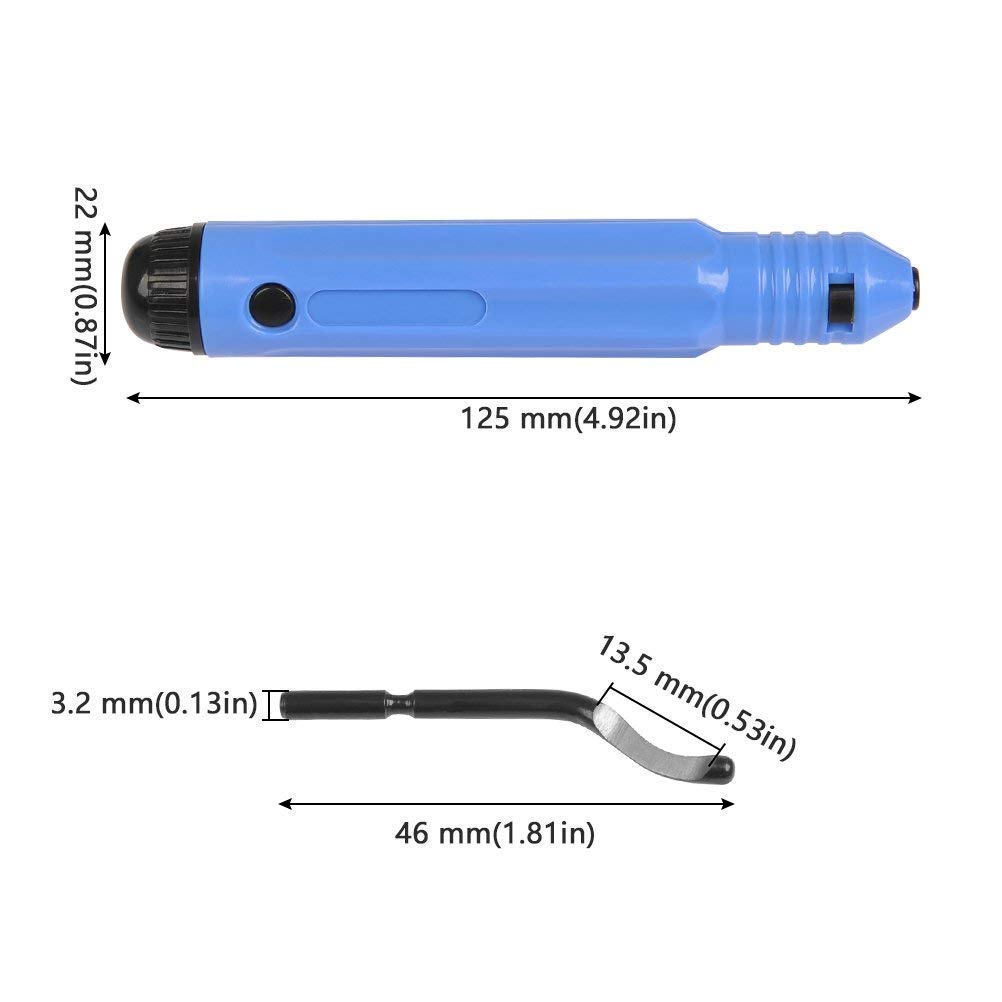
- Size: 125mm x 22mm
- Weight: 26.3g
Blade
- Material: M2 High-Speed Steel (HSS)
- Hardness: 63RC
- Blade Including Angle: 40 degree
- Blade Lenght: 46mm
- Blade Diameter: 3.2mm
- Weight: 2.6g
What's in the box?
1 x Deburring tool
10 x blades
Replacement blades are available
Resources
How to use and reviews from My Tech Fun
You might also like this 3D printable case to keep all your blades safe.

Check out how can you use it with Arduino, by Maker Tutor:
So you can also use it with Arduino, Raspberry Pi or micro:bit
- This is a piezo buzzer or passive buzzer.
- It requires pulses with certain frequency to produce tones.
- Come with easy to use jumper housing
- Operating voltage: 5V DC
- Found normally on computer motherboard, act as speaker to produce audio feedback of computer status/problem.
What's in the box?

The Push Button Panel Mount 10mm with Wire-20cm is a versatile and reliable button that is perfect for a variety of applications. Its bright red color makes it easy to locate, and its compact 10mm size makes it perfect for tight spaces. This button comes with a 20cm wire, making it easy to connect to your circuitry.
The panel mount design of this button ensures a secure and stable connection, and its easy-to-use design makes it perfect for both beginners and professionals alike. With its momentary action, this switch is ideal for applications where you need a temporary connection.
The button is a normally-open micro-switch. When pressed, the contacts short closed and completes the circuit :) The diameter of the body is 10mm so if you want to poke a hole for mounting it, make sure the hole size fits it. No screw needed for mounting, just press and fit into the hole.
- Normally Open Momentary Push Button
- Red Button
- Press Fit type
- Rated voltage: 24VDC
- Rated current: 2A continuous
- Total height: 31.7mm
- Body diameter: 10mm
- Recommended Mounting Hole Diameter: 10.5mm
- Pre-soldered with 20 cm jumper wire terminated with male header pin
Whats in the box?
1 x Push Button (Red) Panel Mount 10mm with Wire-20cm
Resources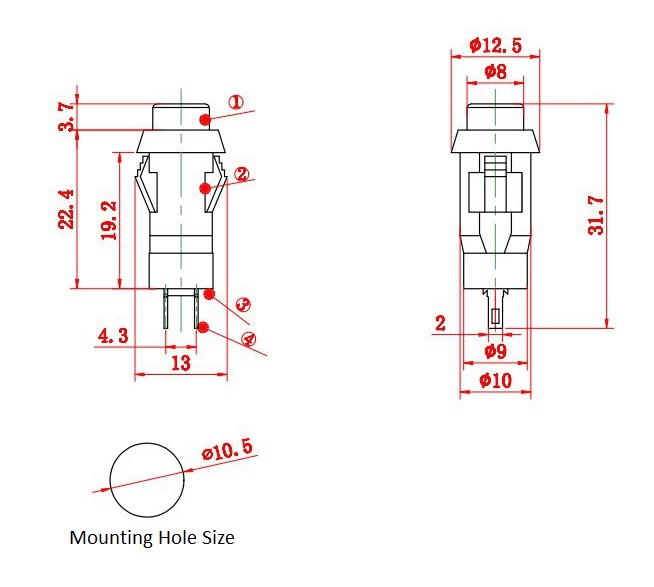

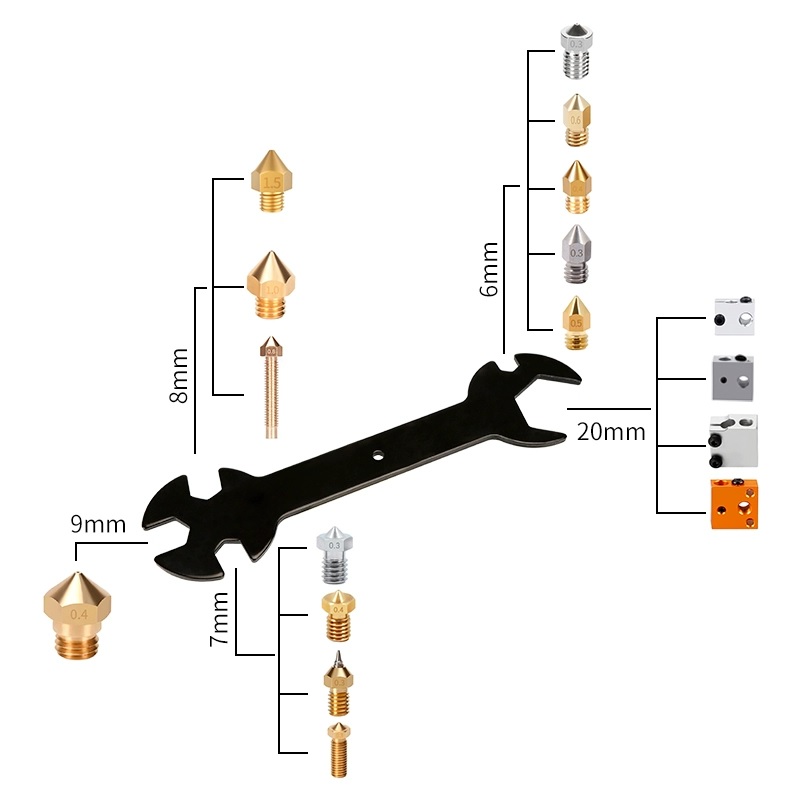
This is a 5-in-1 wrench multi-functional tool for a 3D Printer, suitable for MK8 MK10 UM2 E3D Nozzle Heater Block.
The opening size is: 6mm, 7mm, 8mm, 9mm, and 20mm, suitable for nozzles of various sizes.
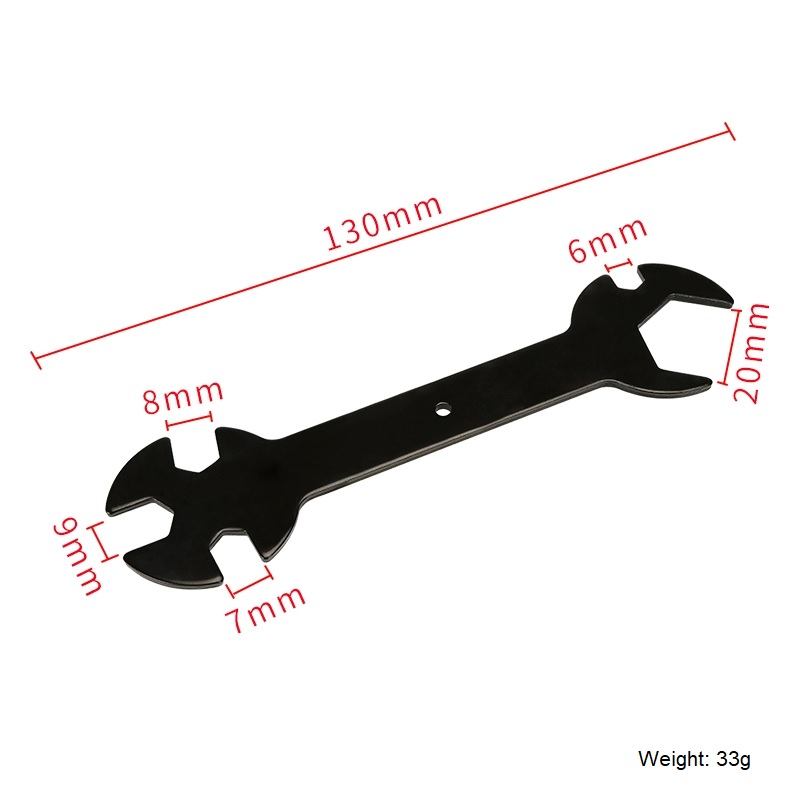
Made of high-quality iron, surface treatment electrophoresis, high hardness, not easy to rust, no deformation, wear resistance and long service life.
With a 5-in-1 function used to replace nozzles and heating blocks for FDM 3D printers. Small in size, light in weight, easy to carry and store, and does not take up extra space.
What's in the box?
1 x 3D Printer Heat Block and Nozzle Wrench (5 in 1)

Our 4xAA battery holder is perfect for hobbyists looking for a reliable power source for their DIY electronics projects. Made from durable materials, it's easy to install and use with simple connections. Its compact design makes it portable, so you can work on your projects anywhere. Order yours today and take your projects to the next level!
What's in the box?
1 x Quad AA Battery Holder
Need batteries? You will find our battery selection here

Following the strictest quality standards, and using the highest quality raw materials, take your 3D printing experience to a new level!
With a 2.0mm inner diameter and 4.0mm outer diameter, it is compatible with all 1.75mm PLA, ABS, and other filaments. It is also durable enough to stand the 3D printer's high printing temperature.
Features
- Compatible with 3D Printers:
- Material: Durable PTFE
- Safe and odorless
- Size: Inner diameter: 2mm ± 0.05mm, Outer diameter: 4mm
- High-temperature resistance: 190℃ to 260℃
- Colour: Blue
What's in the box?
1 x Blue PTFE Tube (1m)

Specifications
- Resistance: 5K
- Voltage rating: 300 Volt (max.)
- Power rating: 0.5 Watt
- Tolerance: 10%
- RoHS: Yes
1 x Finger adjust Preset Potentiometer
Resources
Python Library
Definition, Types, And Working Principle
Specifications
- Resistance: 10K
- Voltage rating: 300 Volt (max.)
- Power rating: 0.5 Watt
- Tolerance: 10%
- RoHS: Yes
1 x Finger adjust Preset Potentiometer
Resources
Python Library
Definition, Types, And Working Principle
Specifications
- Resistance: 20K
- Voltage rating: 300 Volt (max.)
- Power rating: 0.5 Watt
- Tolerance: 10%
- RoHS: Yes
1 x Finger adjust Preset Potentiometer
Resources
Python Library
Definition, Types, And Working Principle

Note: To change the blade and open the top cover, you need to press the button in the red circle.
Blade Specifications
- Material: M2 High-Speed Steel (HSS)
- Hardness: 63RC
- Blade Including Angle: 40 degree
- Blade Lenght: 46mm
- Blade Diameter: 3.2mm
- Weight: 2.6g
What's in the box?
10 x replacement blades.
Resources
How to use and reviews from My Tech Fun
You might also like this 3D printable case to keep all your blades safe.

Specifications
- Multicolored
- 200mm
- Female to Female
What's in the box?
1 x Ribbon of 40 lines
Resources

- Ribbon of 40 x 300mm
- Male to Female
Features
- Tested for Compatibility with the Raspberry Pi
- Breadboard compatible
- Colour: Multi-coloured
What's in the box?
40 x 200mm Male to Female Jumper cables

Features
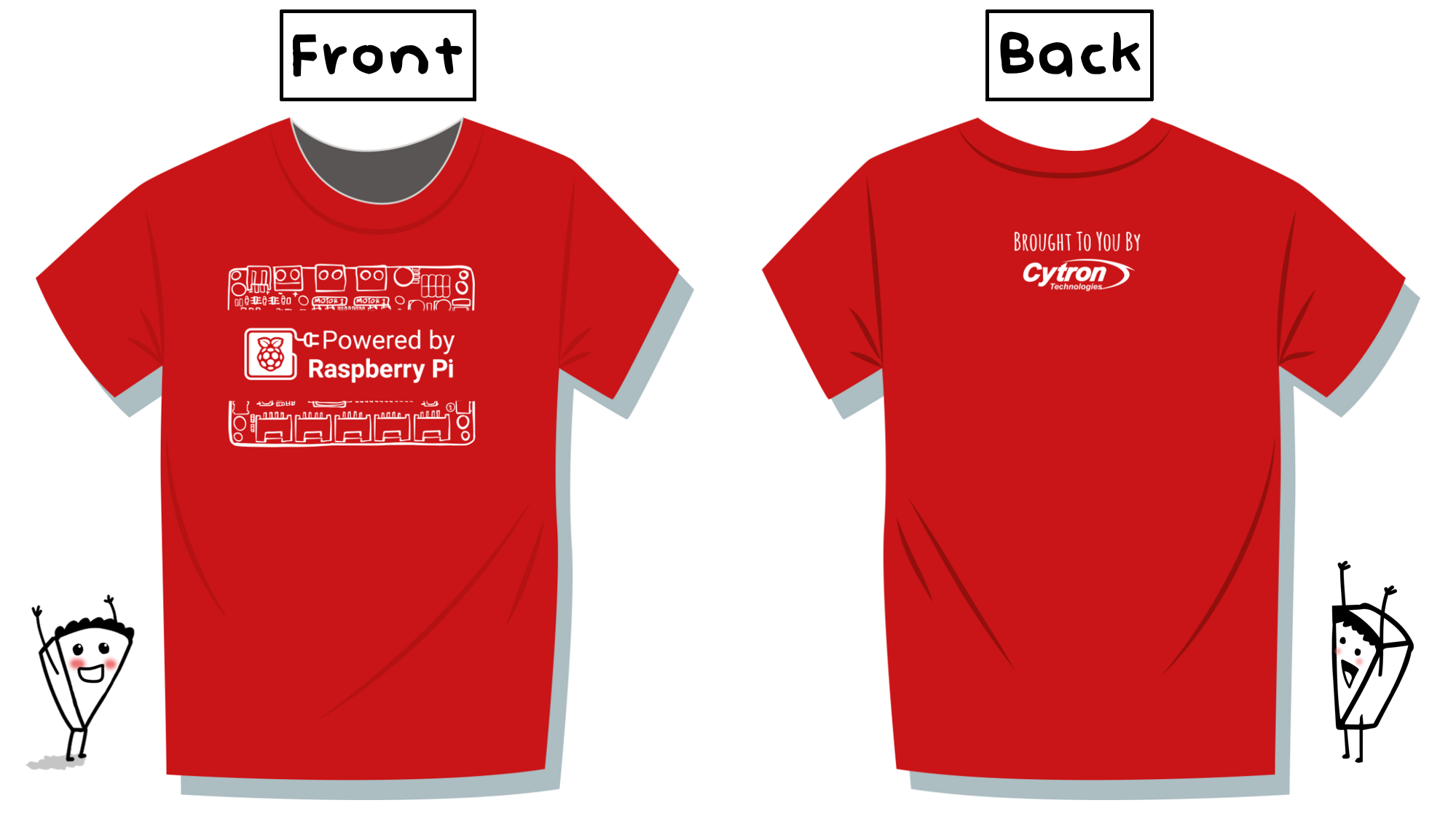
- The new "Powered by Raspberry Pi" logo T-shirt from Cytron Technologies!
- 100% cotton
- RED colour with WHITE colour design
Available Sizes
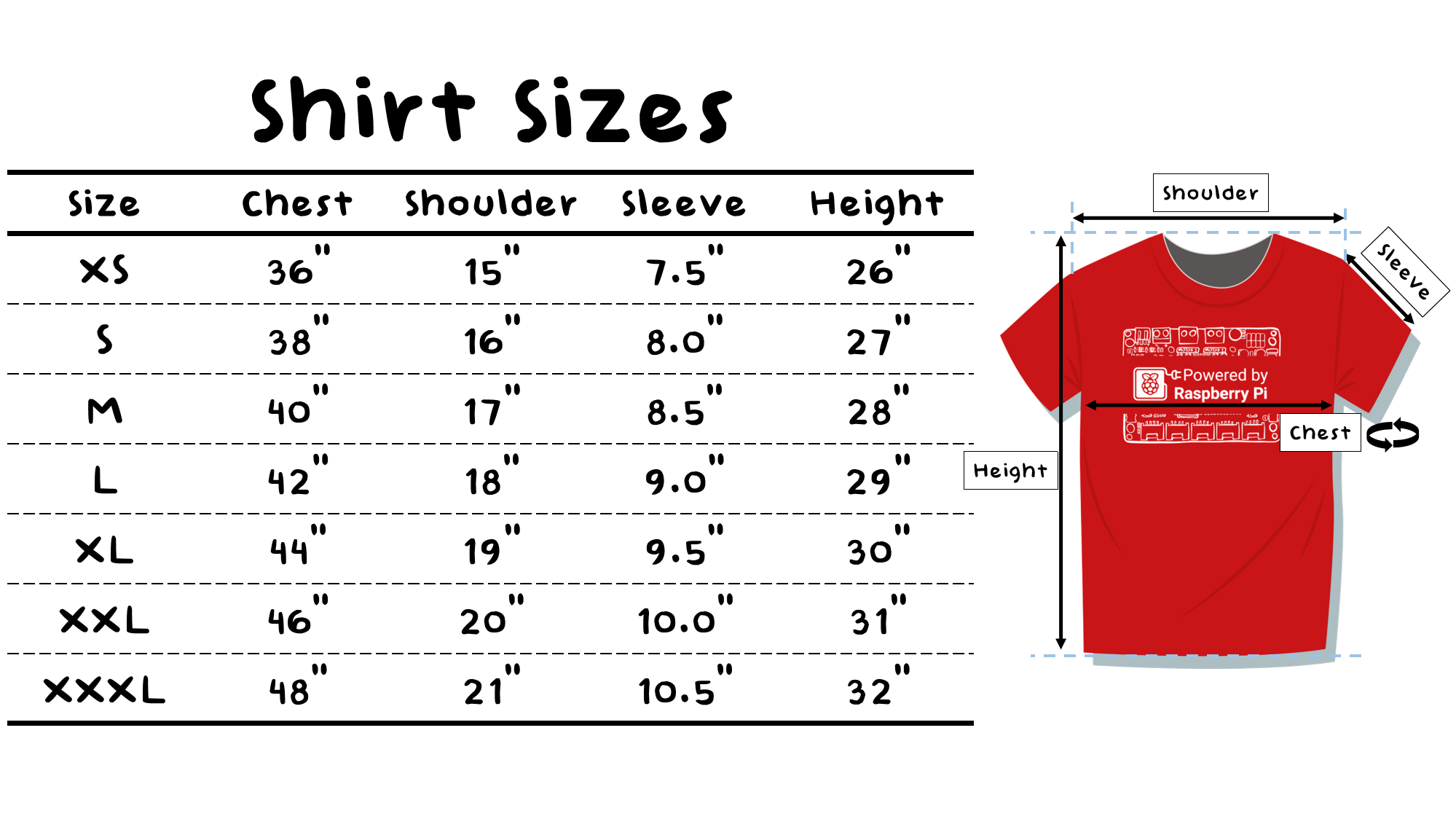
- Extra Small (XS): 36" or 91.44cm for the Chest, 26" or 66.04cm for Height
- Small (S): 38" or 96.52cm for the Chest, 27" or 68.58cm for Height
- Medium (M): 40" or 101.6cm for the Chest, 28" or 71.12cm for Height
- Large (L): 42" or 106.68cm for the Chest, 29" or 73.66cm for Height
- Extra Large (XL): 44" or 111.76cm for the Chest, 30" or 76.2cm for Height
- Double Extra Large (XXL): 46" or 116.84 cm for the Chest, 31" or 78.74 cm for Height
- Triple Extra Large (XXXL): 48" or 121.92 cm for the Chest, 32" or 81.28 cm for Height
What's in the box?
1 x T-shirt "Powered By Raspberry Pi"
Features
- The new "Powered by Raspberry Pi" logo T-shirt from Cytron Technologies!
- 100% cotton
- RED colour with WHITE colour design
Available Sizes
- Extra Small (XS): 36" or 91.44cm for the Chest, 26" or 66.04cm for Height
- Small (S): 38" or 96.52cm for the Chest, 27" or 68.58cm for Height
- Medium (M): 40" or 101.6cm for the Chest, 28" or 71.12cm for Height
- Large (L): 42" or 106.68cm for the Chest, 29" or 73.66cm for Height
- Extra Large (XL): 44" or 111.76cm for the Chest, 30" or 76.2cm for Height
- Double Extra Large (XXL): 46" or 116.84 cm for the Chest, 31" or 78.74 cm for Height
- Triple Extra Large (XXXL): 48" or 121.92 cm for the Chest, 32" or 81.28 cm for Height
What's in the box?
1 x T-shirt "Powered By Raspberry Pi"
Features
- The new "Powered by Raspberry Pi" logo T-shirt from Cytron Technologies!
- 100% cotton
- RED colour with WHITE colour design
Available Sizes
- Extra Small (XS): 36" or 91.44cm for the Chest, 26" or 66.04cm for Height
- Small (S): 38" or 96.52cm for the Chest, 27" or 68.58cm for Height
- Medium (M): 40" or 101.6cm for the Chest, 28" or 71.12cm for Height
- Large (L): 42" or 106.68cm for the Chest, 29" or 73.66cm for Height
- Extra Large (XL): 44" or 111.76cm for the Chest, 30" or 76.2cm for Height
- Double Extra Large (XXL): 46" or 116.84 cm for the Chest, 31" or 78.74 cm for Height
- Triple Extra Large (XXXL): 48" or 121.92 cm for the Chest, 32" or 81.28 cm for Height
What's in the box?
1 x T-shirt "Powered By Raspberry Pi"

Note: This M.2 case is compatible with both NVMe and SATA SSD.
Some people must be tired of using small SD cards as memory space with low performance and specifications. It's time to change! Let's upgrade to SSD storage instead of using the normal SD card. The problem is most computer, smartphone, and Raspberry Pi does not have the socket for SSD storage. To overcome this problem, you just need a portable drive!
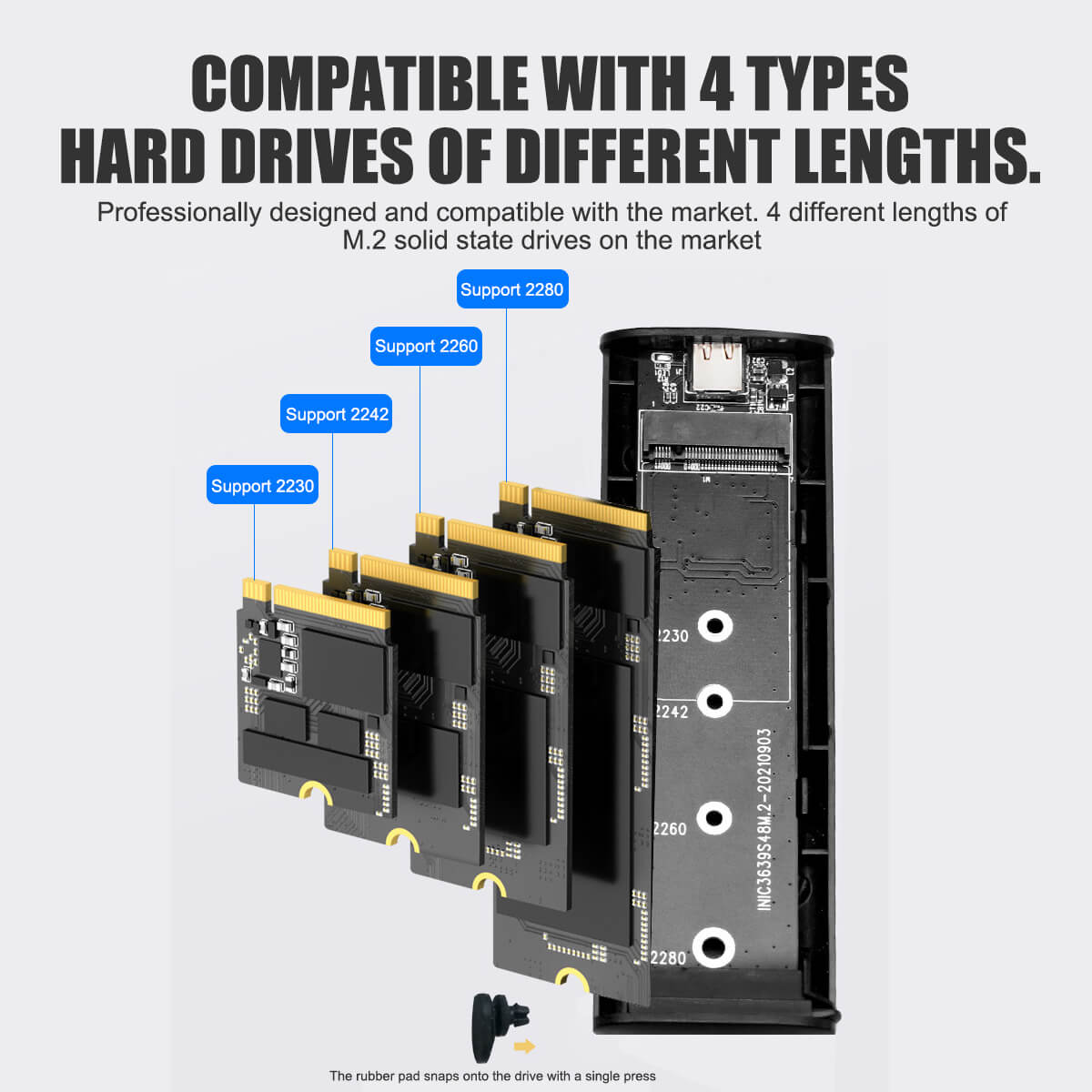
Plus, this case can be used with 4 variations of M.2 size (2230, 2242, 2260, 2280). It also comes with a USB C to USB 3.0 cable, so that you can directly connect to Raspberry Pi or any computer.
With this external M.2 NVMe storage, you can just boot the preferred Operating System for the Raspberry Pi 4 Model B direct from the USB! Interesting right? You just have to slot in your M.2 NVMe with preloaded Raspberry Pi OS and plug it into your RPi board. No driver is needed. Plug and play, straight out of the box. :)
- Using NVMe high-speed technology
- USB3.1 Gen 2 interface, transmission speed up to 6Gbps / 10Gbps
- Aluminum alloy shell, durable, easy to carry, and fast heat dissipation
- Easy installation, no need screw to install the case
- Support Raspbian, Windows, Macintosh OS, Linux, and Android systems
- Support Raspberry Pi board, PC, Macbook, smart TV, Android type-C mobile phone, and other digital devices
Specifications
- Enclosure Type: Dual protocol (can support both NGFF/NVMe)
- Material: Aluminum alloy
- Color: Silver
- Master Chip: Xingshuo 225
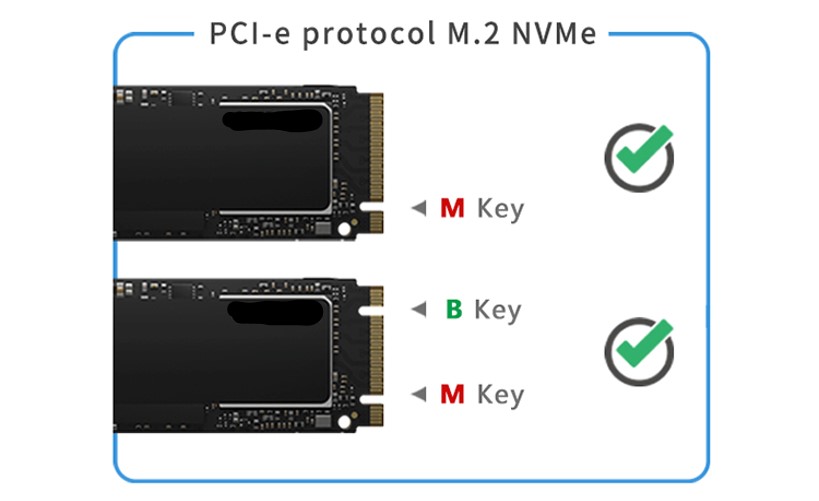
- Hard Disk Protocol:
- M.2 NGFF
- M.2 NVMe
- M.2 NGFF/NVMe
- Speed: 5Gbps @ 10Gbps
- Input Interface: Type-C
- Hard Disk Interface: M-key, B+M Key
- Compatible SSD Size: 2230/2242/2260/2280
- Weight: 70g
- Dimension: 105mm x 38mm x 12mm
What's in the box?
1 x USB 3.1 to M.2 Dual Protocol (NVMe/NGFF) B+M Key
1 x USB-C to USB 3.0 cable
2 x Mounting Screws
You might also need a NVMe drive.
Resources
Installation Guide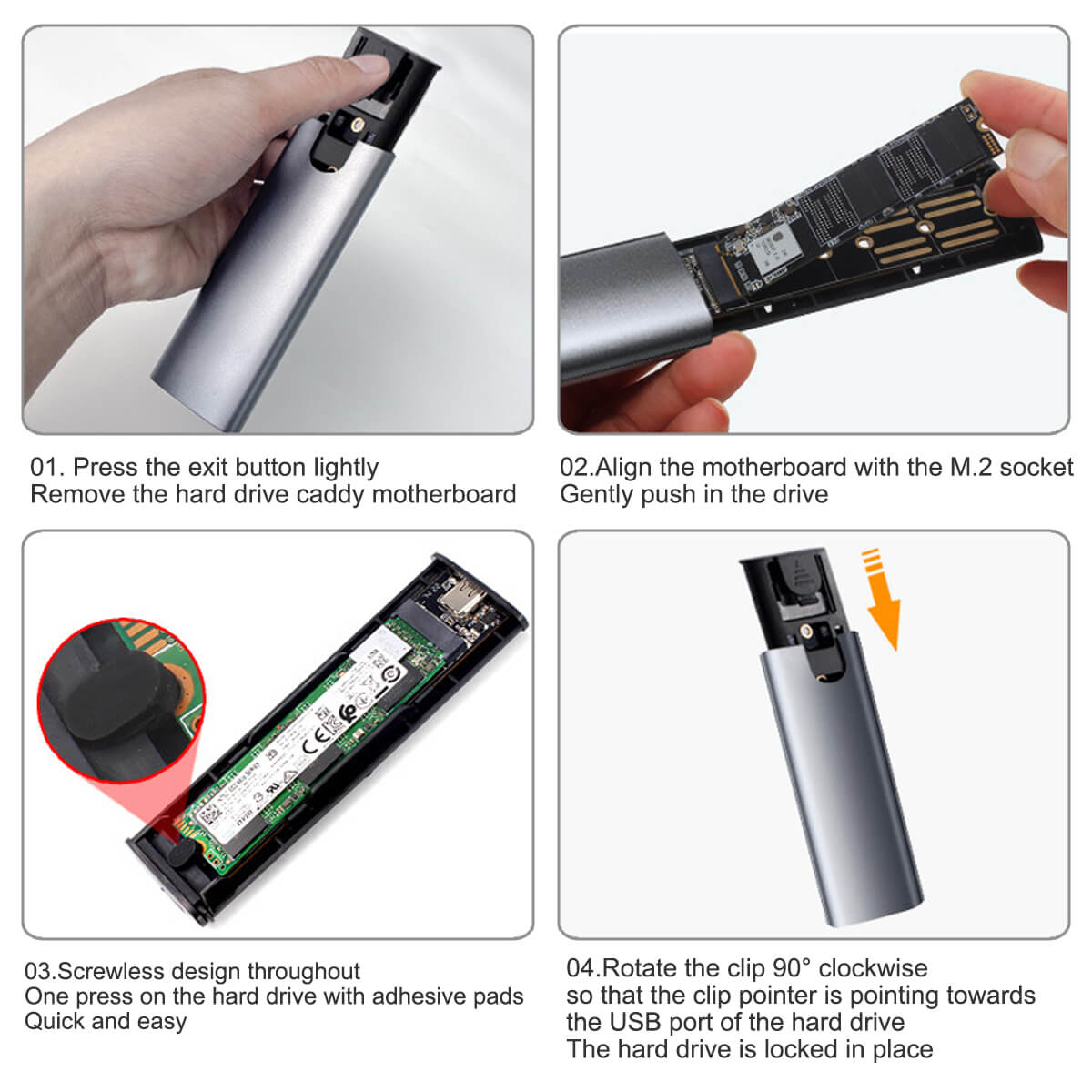

Overall, it is a versatile and reliable relay module that allows users to control higher power circuits with ease. It is well-suited for both hobbyists and professionals who are working on projects involving electronic control systems and automation.
Specifications
- Working Voltage: 3V
- Current: 10A
- DIP 5 pins
- Dimension: 20mm x 20mm x 16mm (LxHxW)
- Weight: 10g
What's in the box?
1 x 3VDC 10A Single Pole Double Throw Relay